Old Trafford from the Spectator’s Seat: Reading the Stand, the Roof and the Pitch
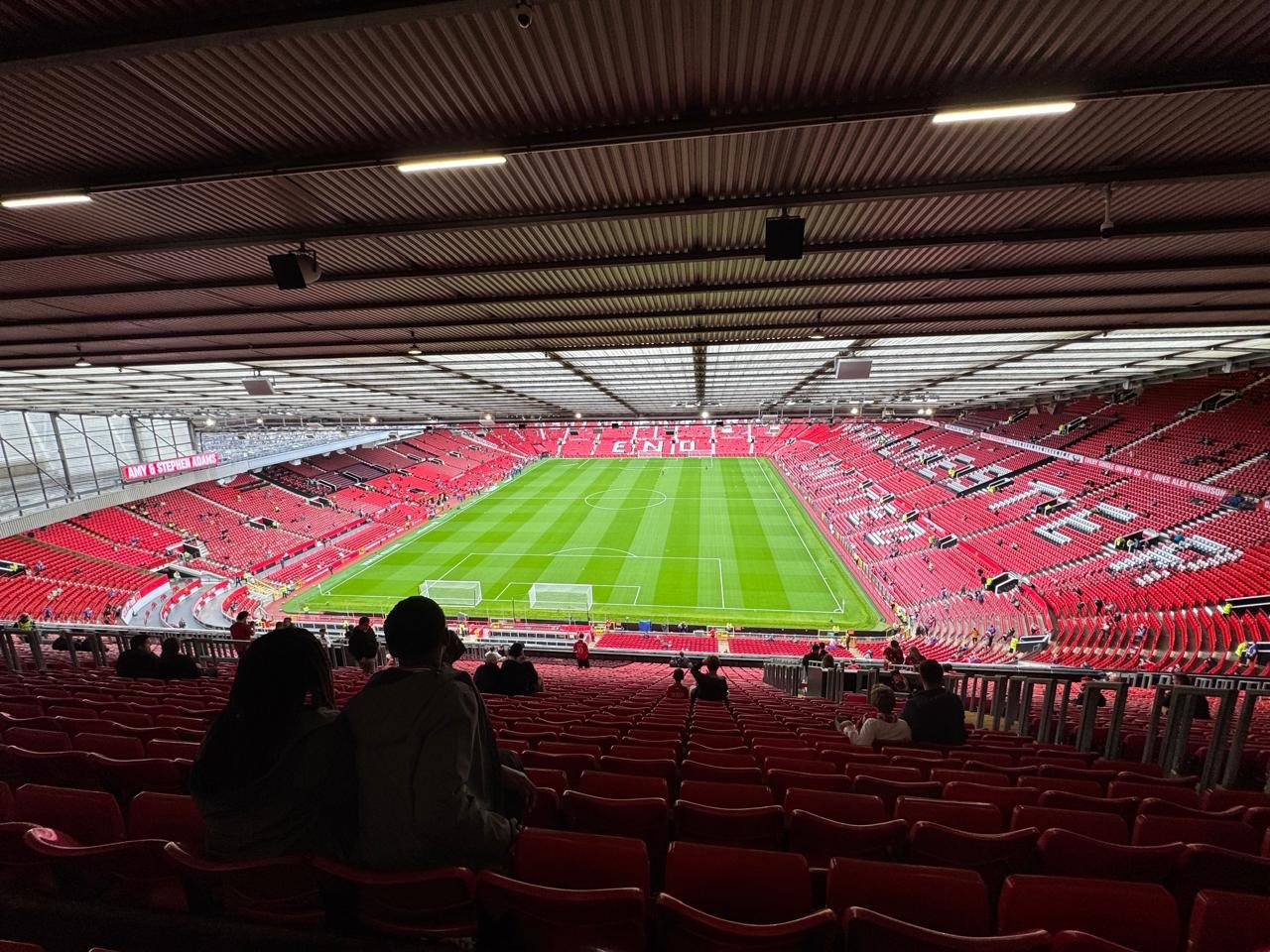
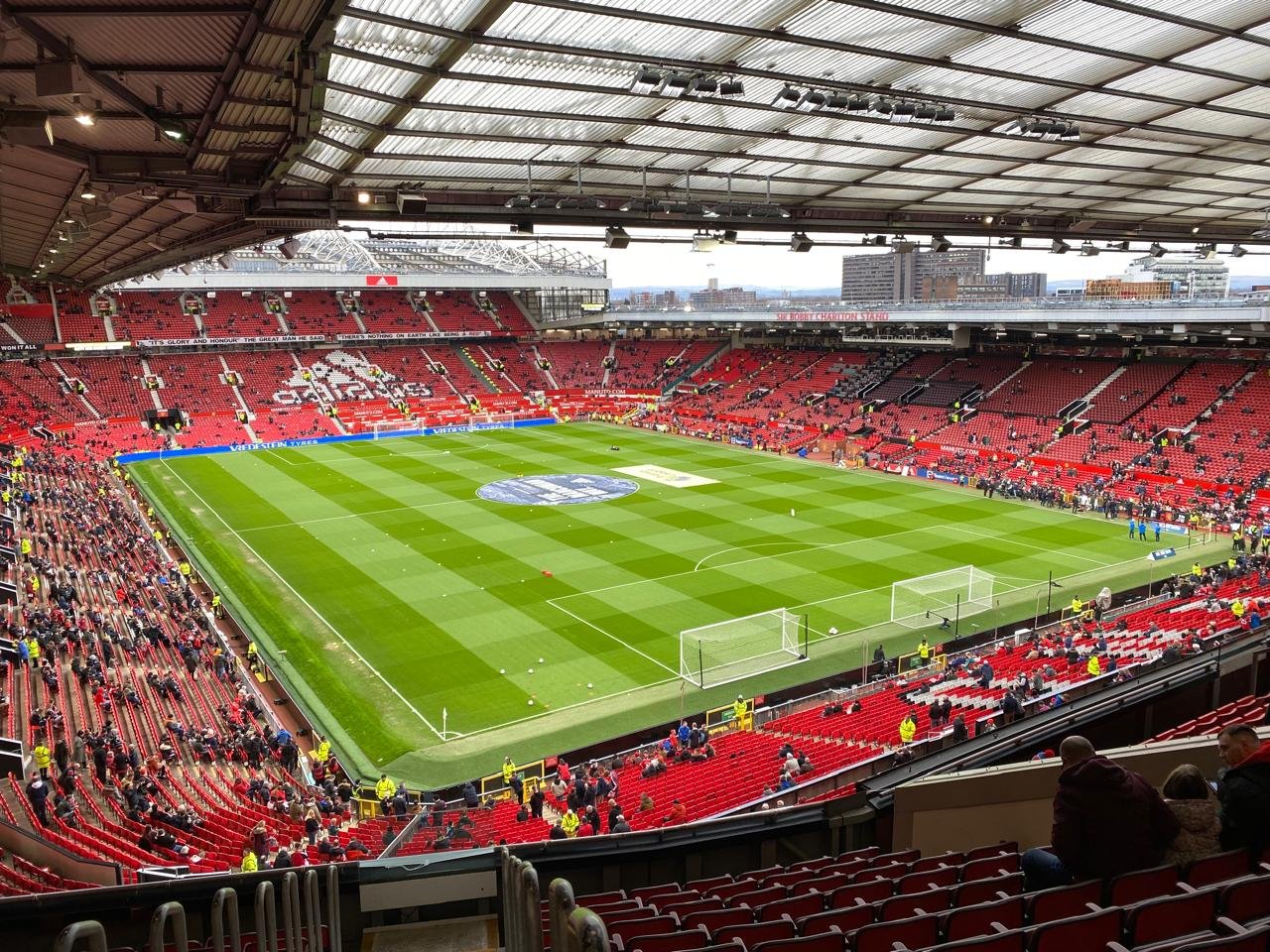
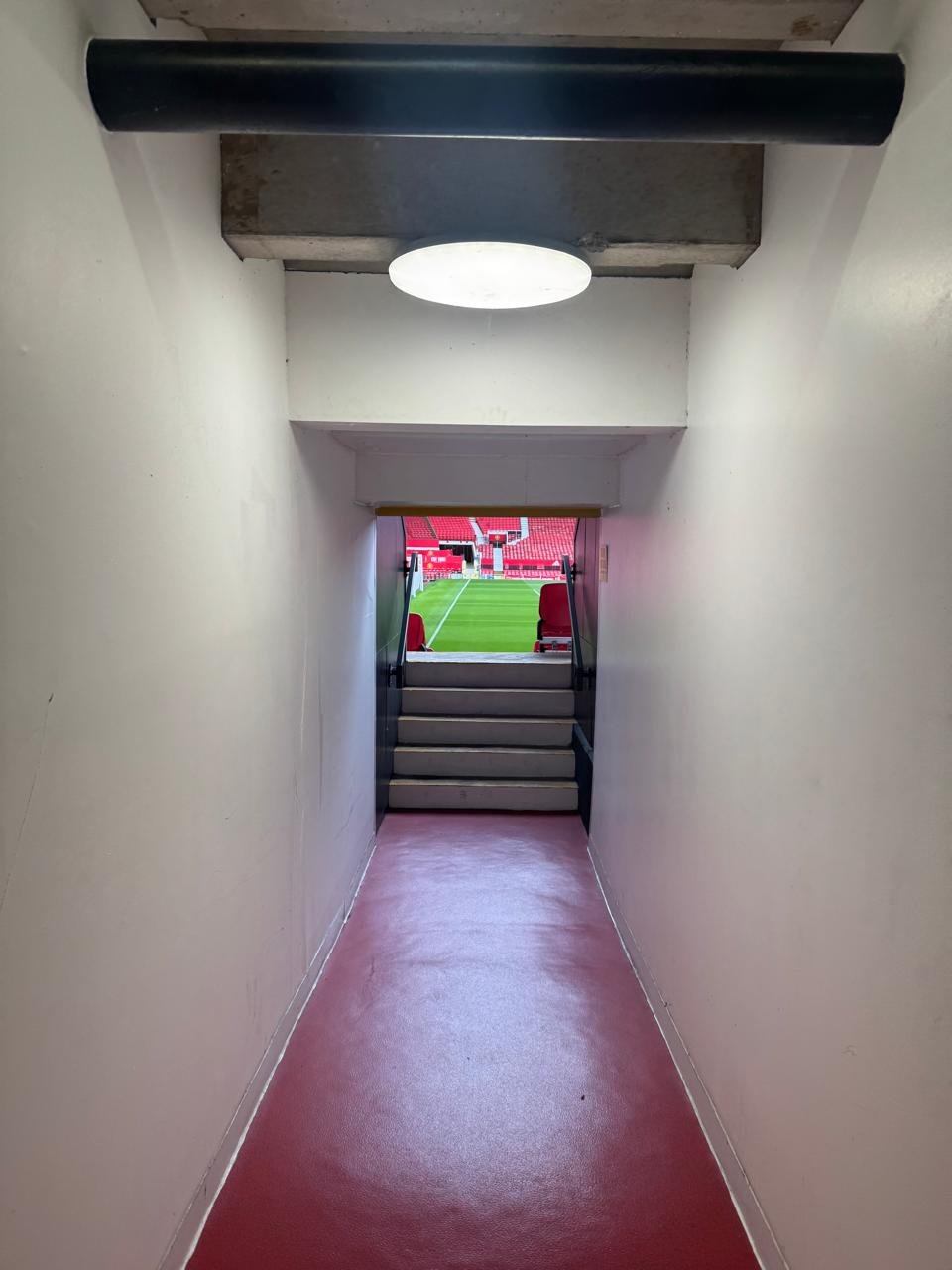
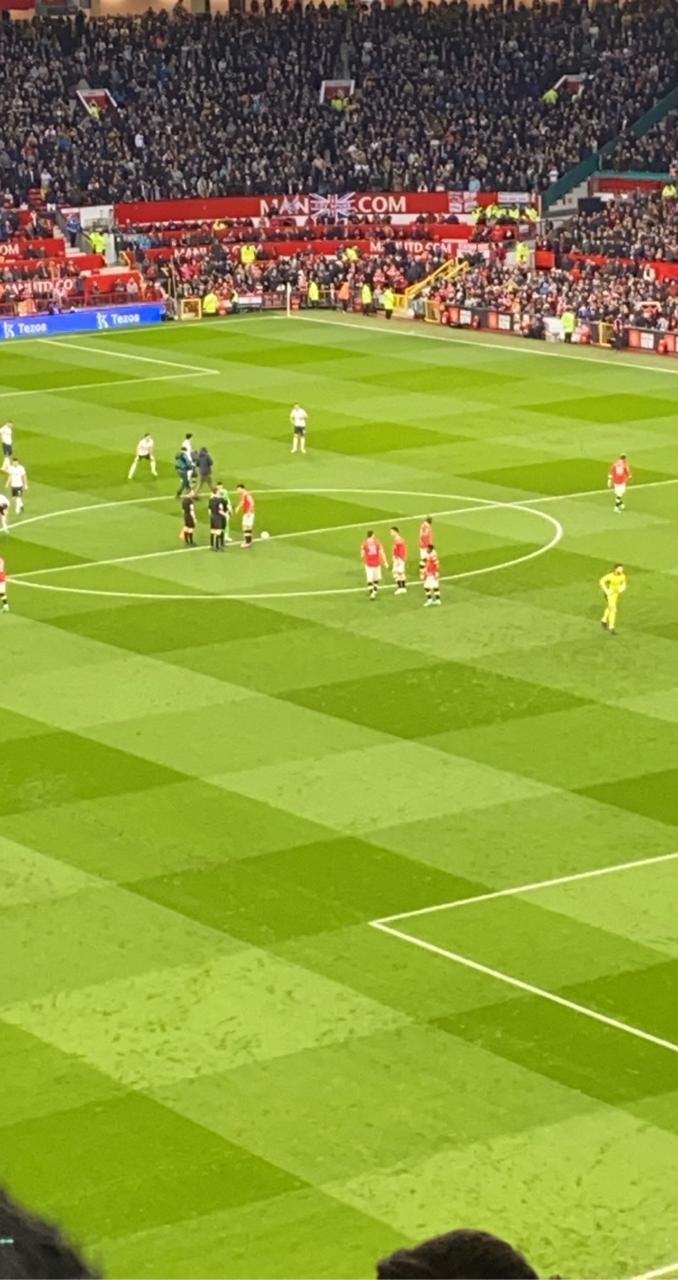
The image the world sees of a stadium is the hung camera’s image: wide, balanced, showing the green rectangle whole. The image lived by the person in the seat is another thing entirely. From the spectator’s seat at Old Trafford the pitch becomes an architectural body with an angle, a rake and an edge, not a flat frame. This is a field reading of what the stand does to the eye and the body, not a review of the stadium’s design and not an attribution of its work to INJ.
A seat, not a camera
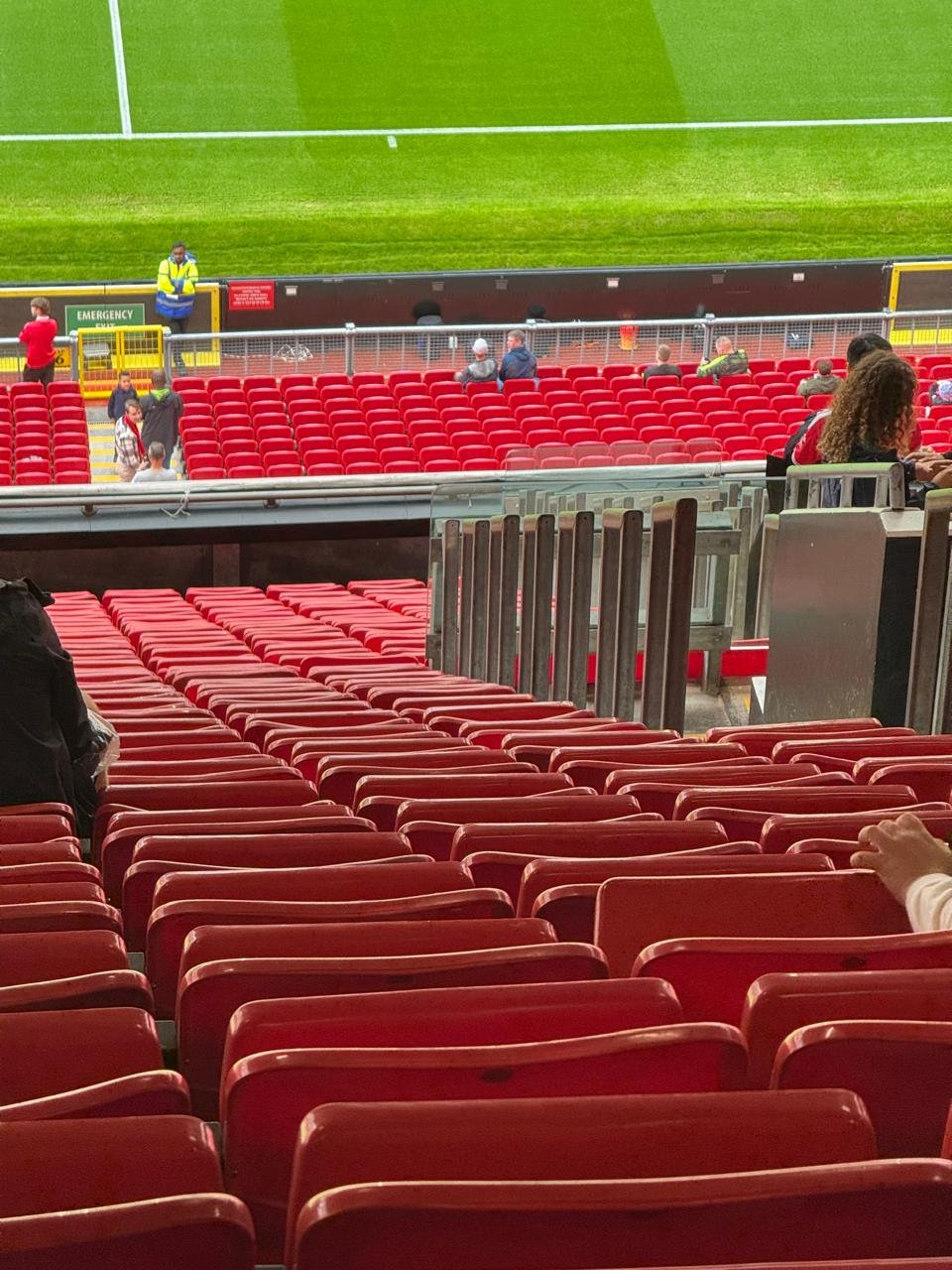
The difference between the two views is not only position but the geometry of sight. The seat fixes the eye at a set height and angle, so the spectator reads the pitch through the rake of the stand and the run of rows ahead. In the literature of stadium design this is the sightline, measured by what is called the C-value: how far a spectator’s eye clears the head of the person in front before the touchline is seen unobstructed. No single photograph proves that value for any seat, yet it is a reminder that viewing comfort is an engineering decision taken in section long before it is felt in the stand.
Stand, roof and pitch: three layers
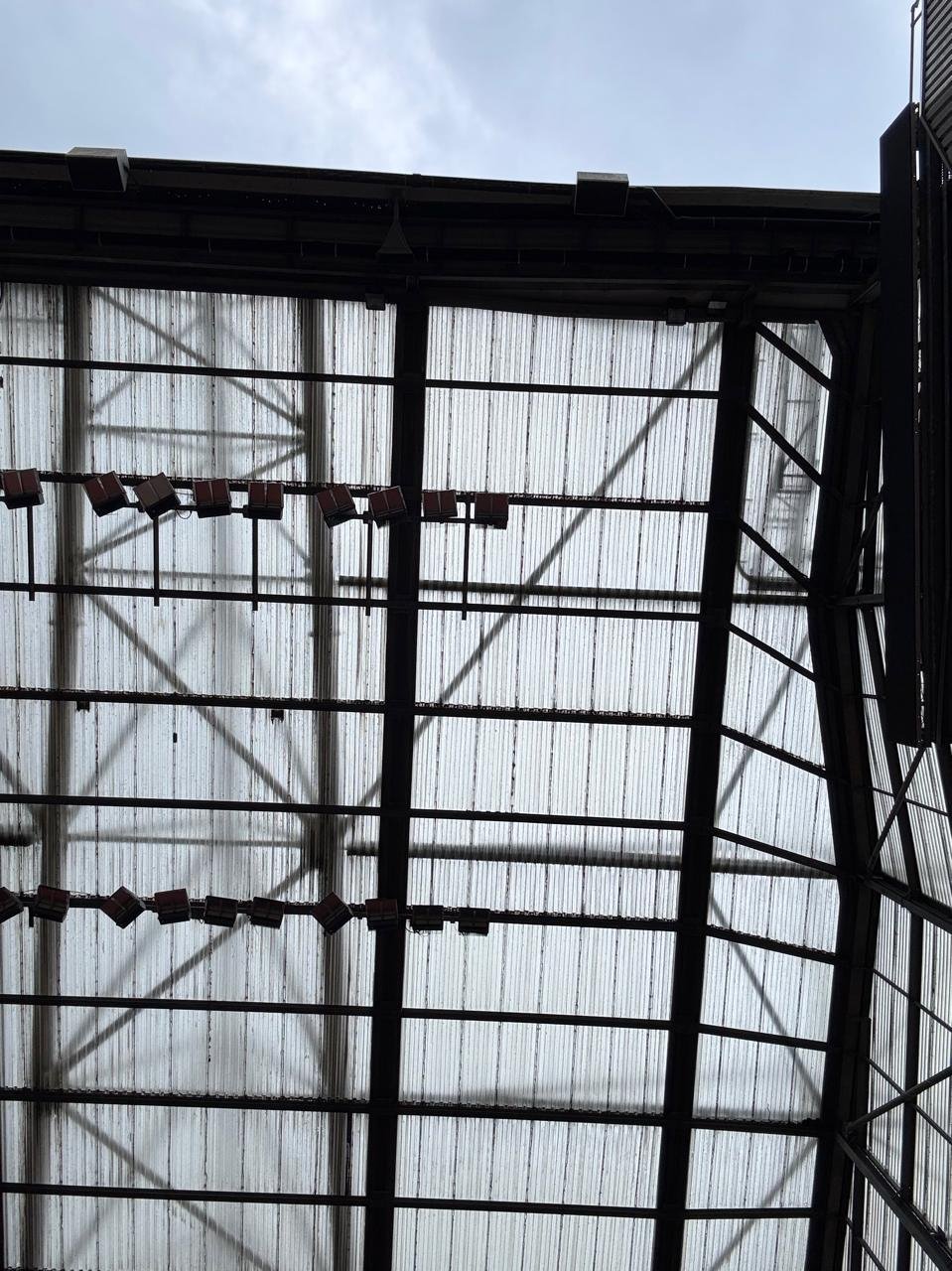
In the wide frame three layers sit together: the striped playing surface, the raked red wall of stands, and the roof that cuts the sky and sets the daylight. The roof here is not merely a cover but a frame that turns open space into an enormous room without a fourth wall, the kind of span that defines the great sporting venues and usually reaches across thousands of seats without a column to break the view. The relationship between the depth of the stand and the height of the roof is what creates the sense of enclosure that separates a full stadium from a bare bank of seats.
The crowd is part of the architecture
The half-filled stand in the photograph reveals a truth the designers of large venues know well: the crowd is an architectural material. The continuous red when the seats fill, and the sound that returns off the curve of the bowl, are both part of the experience of the place rather than an addition to it. The empty seat is designed for the moment it fills, and the bowl is calculated for the greatest human presence, not the least.
What the photograph does not prove
Analytical honesty demands a limit. This photograph does not say that every seat sees what this seat sees, it measures no distance and no angle, and it attributes the design to no one. It is testimony to a single position in a single moment. Its value is that it returns the question to its origin: with which eye do we judge the architecture of a stadium?
By which eye a stadium is measured
The truest test of a stadium’s architecture is not its aerial image, where everything looks composed and complete, but what is seen by the person who paid for a seat and sat among the rows. There, in the angle of sight, the rake of the stand and the frame of the roof, the architecture is actually examined. A stand is measured by the seat, not by the shot, and a great venue is complete only when it fills with the people it was designed for.
Sources: a field reading from the INJ visual archive. On the sightline and the C-value see Geraint John, Rod Sheard and Ben Vickery, Stadia: A Design and Development Guide.