The Exhibition Pavilion as a Small Building
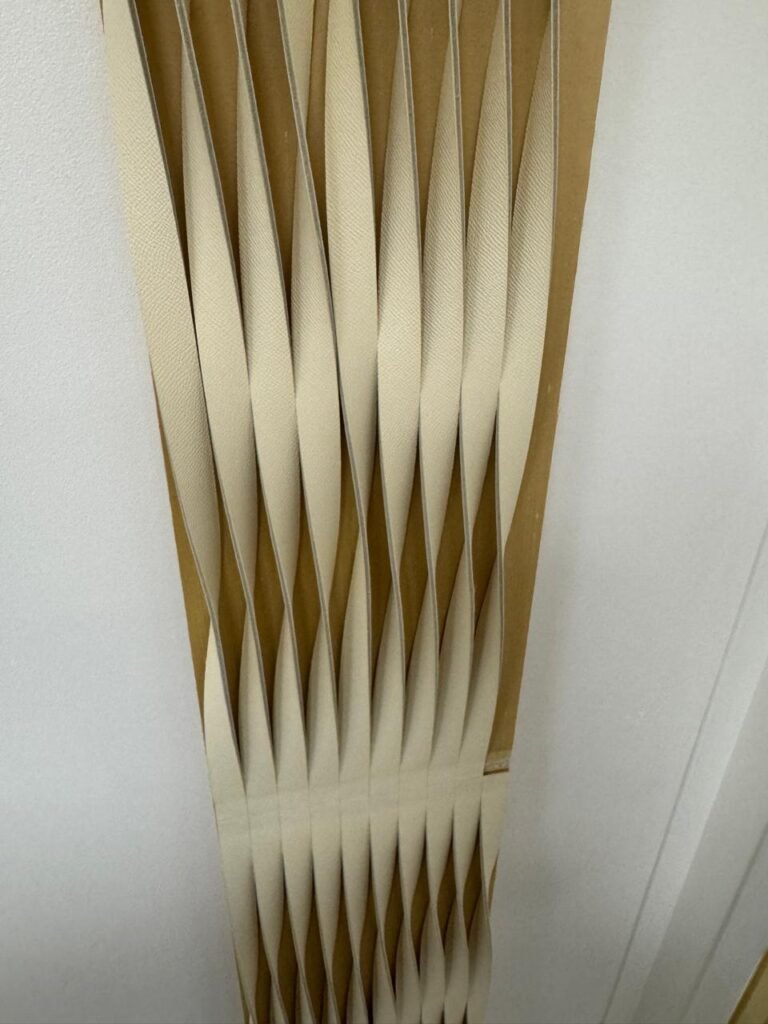
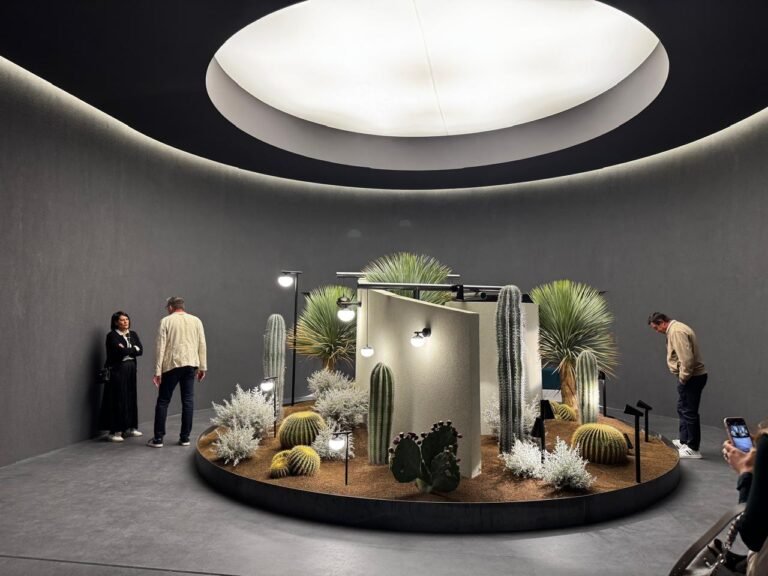
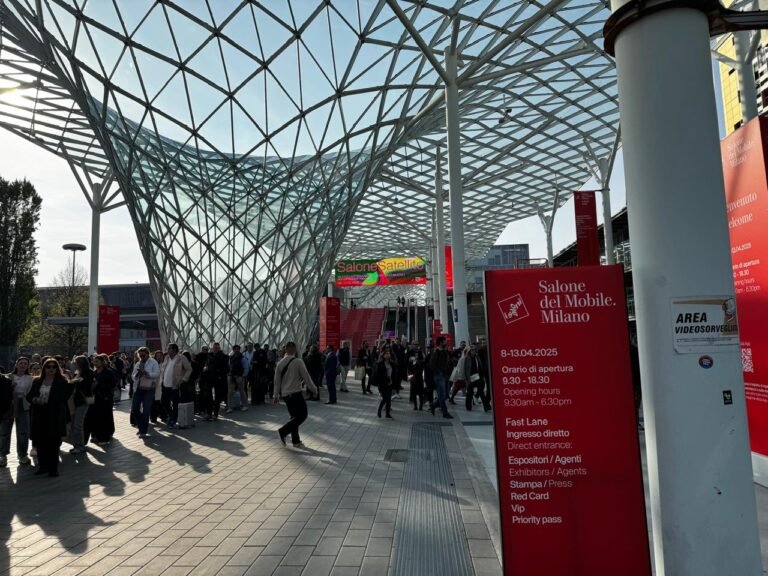
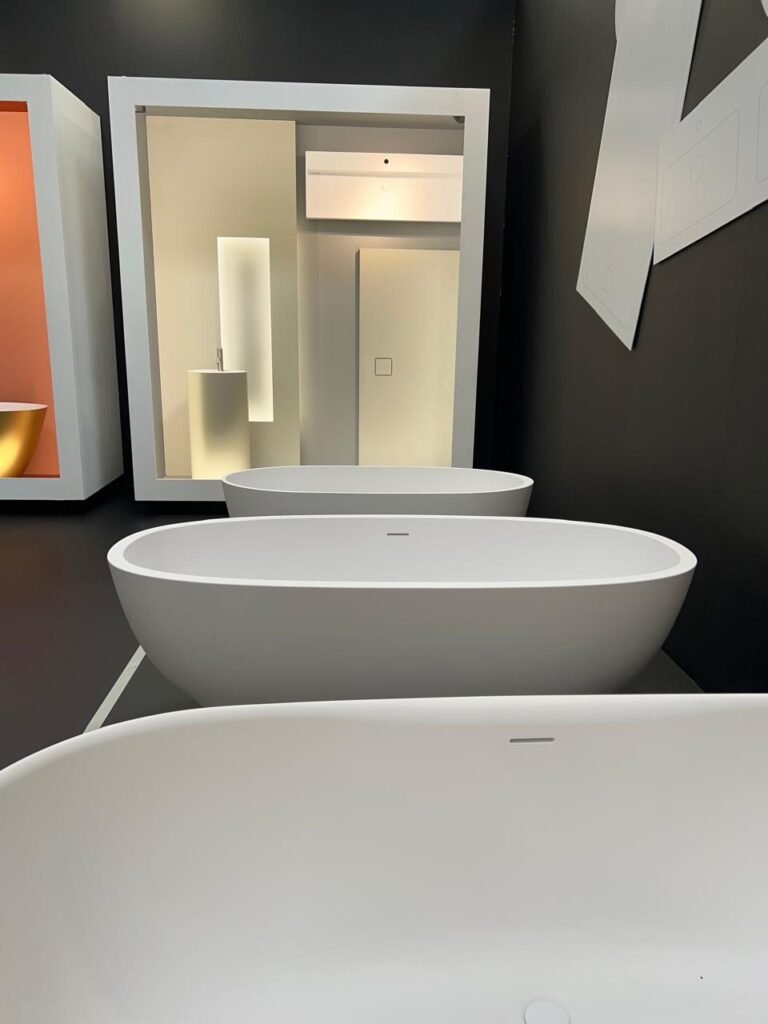
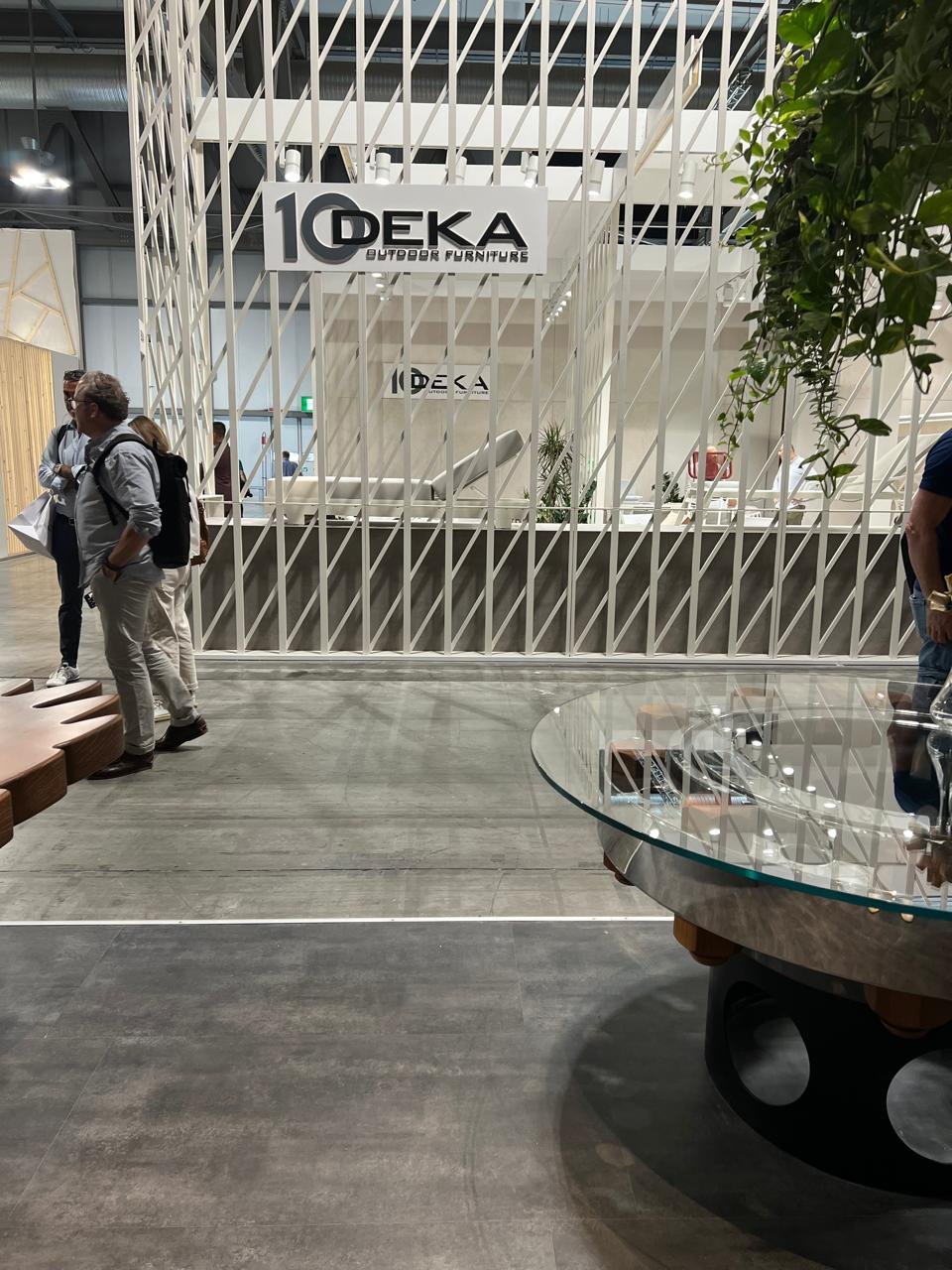
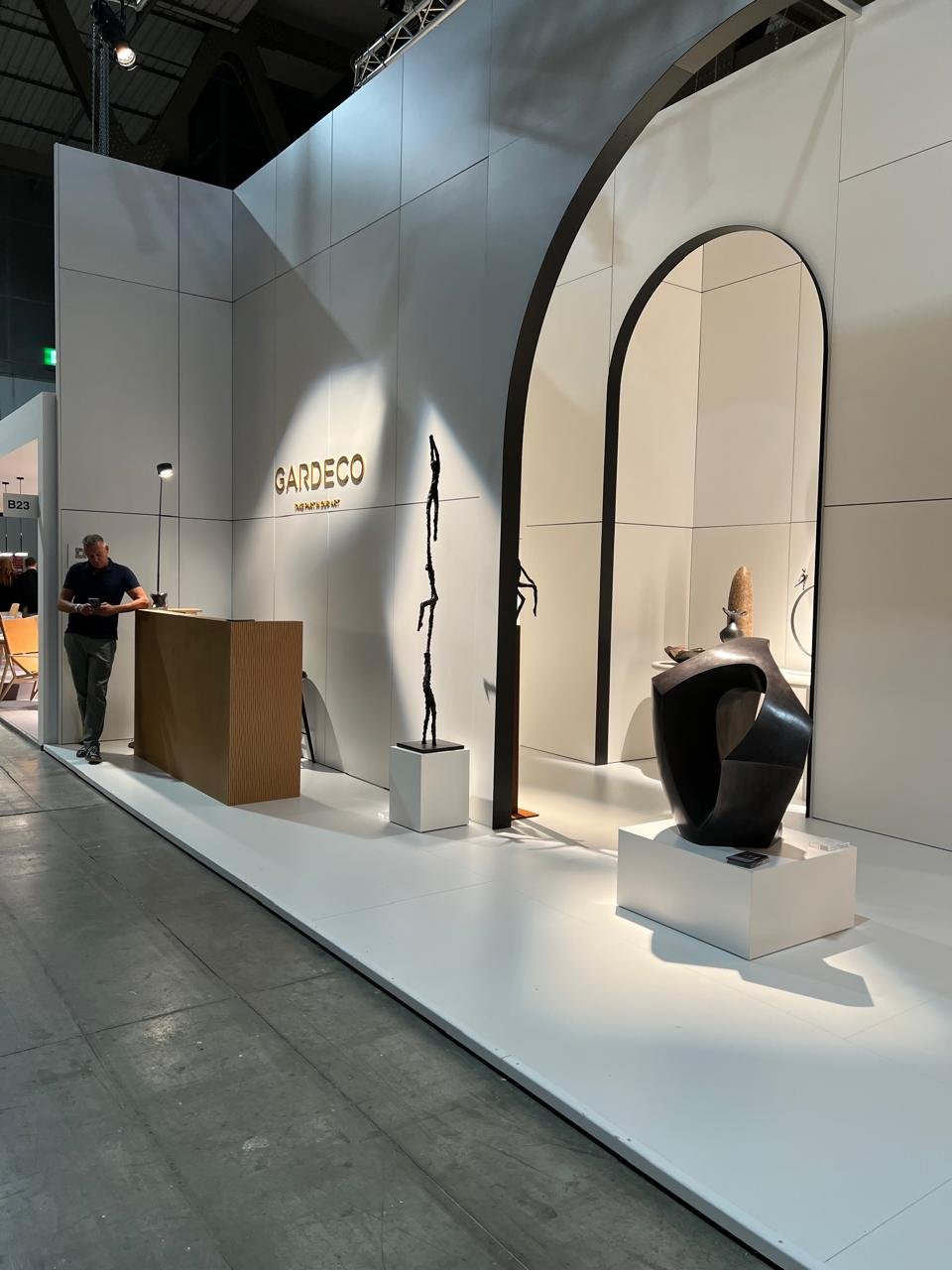
Walk the aisles of a design exhibition and you stop reading the stands as furniture displays. Each one behaves like a small building. It has an approach, a threshold, a route through its interior and a way of ending, and it compresses into a few square meters the decisions a permanent building spreads across an entire site. That compression is precisely what makes the pavilion worth a close architectural reading. The photographs here were taken on the exhibition floor; they record pavilions designed by other practices as a field observation rather than as INJ projects, and what interests us is the grammar they share.
The Threshold Does the First Work
Before a visitor steps in, the pavilion has already addressed them. The edge that separates the public aisle from the stand’s interior is never a neutral line but a first design decision: where it opens, how wide, and what can be seen from outside before anyone crosses. Some pavilions open their whole frontage and dissolve the threshold, inviting the passer-by in before they register crossing anything. Others narrow the entrance and lift the floor a single step, turning entry into a conscious act. Either way the threshold performs the work an entrance performs in a full building. It decides who enters and how, and it sets the rhythm of moving from one space into another.
Circulation in a Few Meters
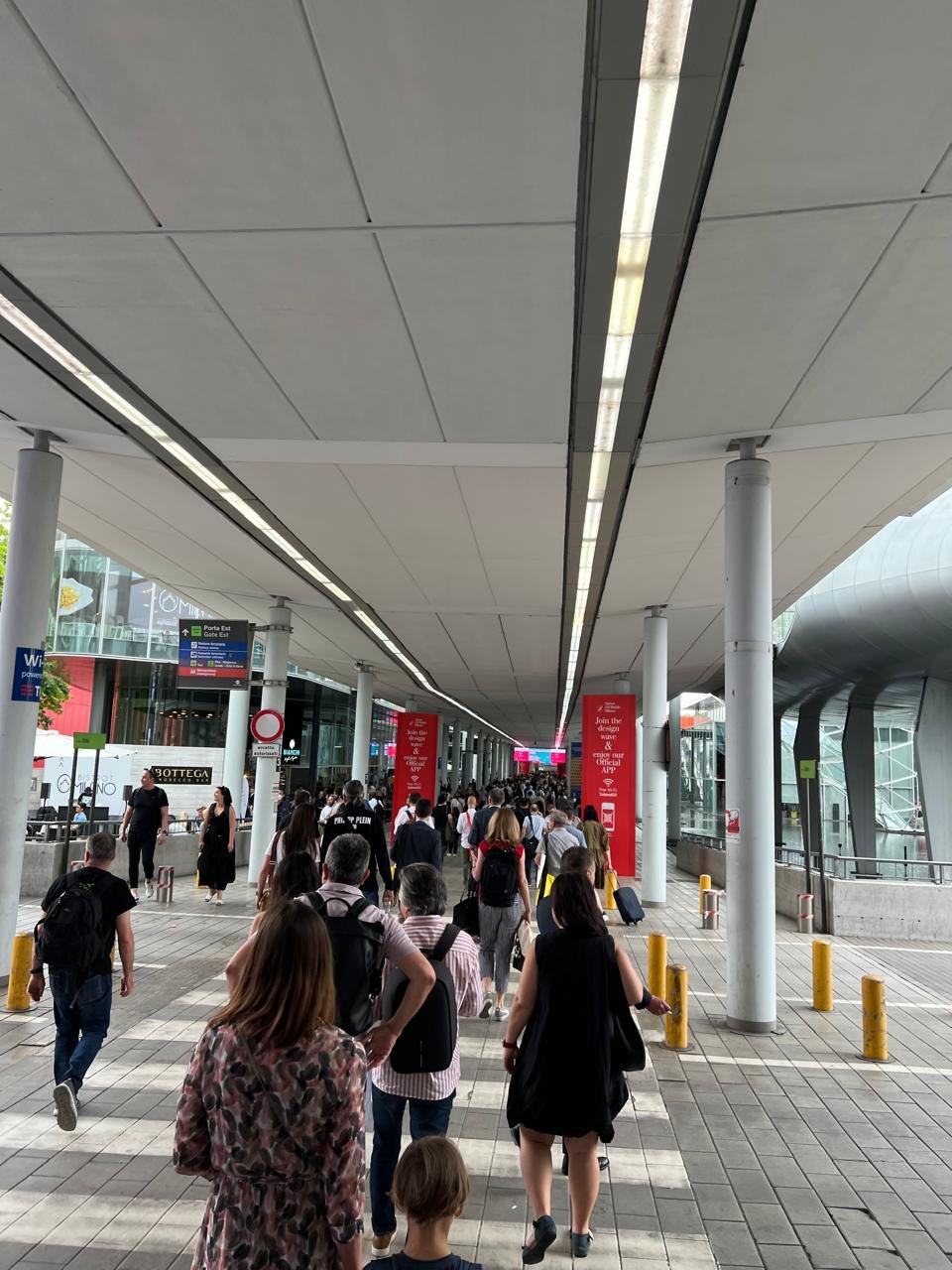
Inside the pavilion, architecture has no luxury of long corridors, so movement is compressed into a short distance. The question, though, is unchanged: how does the body travel from the point of entry to the point where it stops? The most accomplished stands build an implicit route that needs no signage, a central mass to be circled, a short wall that turns the visitor, an opening in the depth that promises another room and draws the step forward. This is not decoration but a structure of movement, and it is the difference between a stand crossed in seconds and one read as a sequence of scenes.
The Missing Fourth Wall
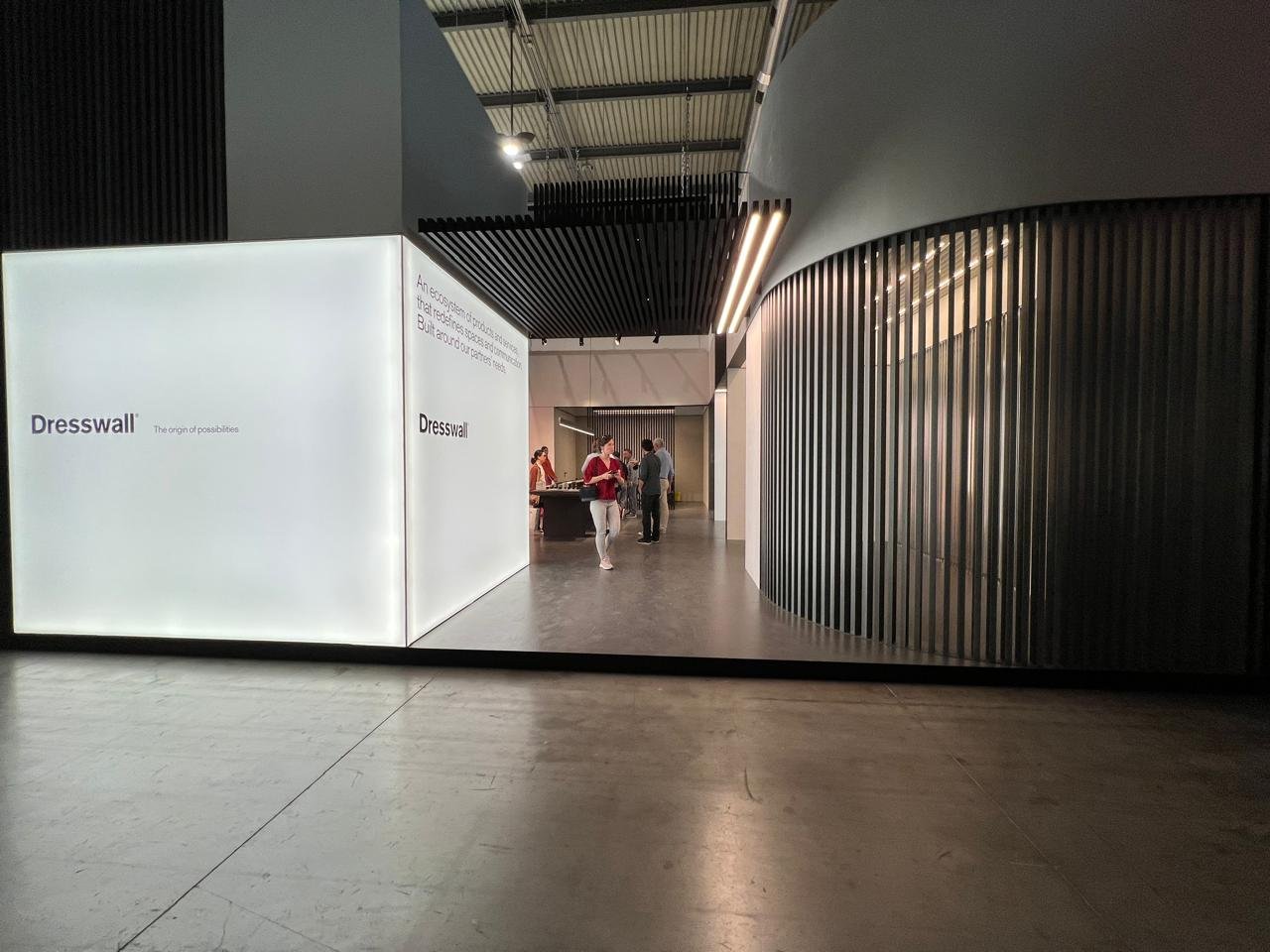
A permanent building closes itself with four walls and a roof. A pavilion usually lives with three walls and a roof that is open or partial, because it has to be seen from the hall. That deliberate deficit hands the designer the problem of enclosure: how to produce the sense of an interior without shutting the space. The recurring solutions are worth naming. A suspended ceiling drops the height over one zone and makes a room without walls; a change in the floor’s color or material draws the edge of the place on the horizontal plane; denser light at the center makes the perimeter read as outside. A successful pavilion convinces you that you have entered somewhere, not that you have stopped in front of a shelf. It is the same lesson a museum teaches when it stops being a display box and becomes the frame that gives its objects their meaning.
Temporary Architecture as Rehearsal, Not Margin
It is easy to treat the pavilion as marginal work, yet temporary architecture has served throughout its history as a laboratory for ideas before they are built to last. The major fairs in Milan, Paris and elsewhere are where studios test a language of materials and junction details they would not risk on a project meant to stand for decades; the stand is close to the moment a manufacturer’s library is first unpacked in public. For a Saudi market that builds at a high tempo and increasingly hosts exhibitions and events of its own, reading the pavilion as a small building is direct training: threshold, circulation and enclosure are decisions that transfer without alteration from a temporary stand to a hotel lobby or a gallery. This is where our interest in interiors and the industries behind them meets our reading of temporary architecture as a test rather than a spectacle.
A Pavilion Is a Building That Admits It Is Temporary
The one essential difference between the pavilion and the building is that the pavilion knows it is temporary and designs on that knowledge, reducing every decision to its essence because it cannot hide behind time. That is its truest lesson. A pavilion is a building that admits it is temporary, saying in a few meters what the permanent building needs a whole site to say.