How Vision 2030 is Reshaping Residential Architecture in Saudi Cities
Saudi Arabia’s Vision 2030 has become one of the most influential drivers of urban and architectural change in the Kingdom. While the initiative is widely recognized for its economic diversification and large-scale development projects, it is also transforming the way residential neighborhoods and homes are planned, designed, and built.
Residential architecture is evolving to meet changing lifestyles, rapid urbanization, environmental goals, and new housing expectations. Rather than focusing only on larger homes, current projects emphasize quality of life, walkability, sustainability, and smarter use of space.
Vision 2030 and Housing Development
Housing is one of the major components of Vision 2030, aiming to increase homeownership while improving the quality and diversity of residential communities.
| Development Goal | Impact on Residential Architecture |
|---|---|
| Higher homeownership | Increased housing development |
| Urban expansion | New residential districts |
| Better quality of life | Improved neighborhood planning |
| Housing diversity | More residential typologies |
| Sustainable growth | Greater environmental integration |
These objectives encourage architects and developers to rethink traditional residential models.
Shift from Individual Buildings to Integrated Communities
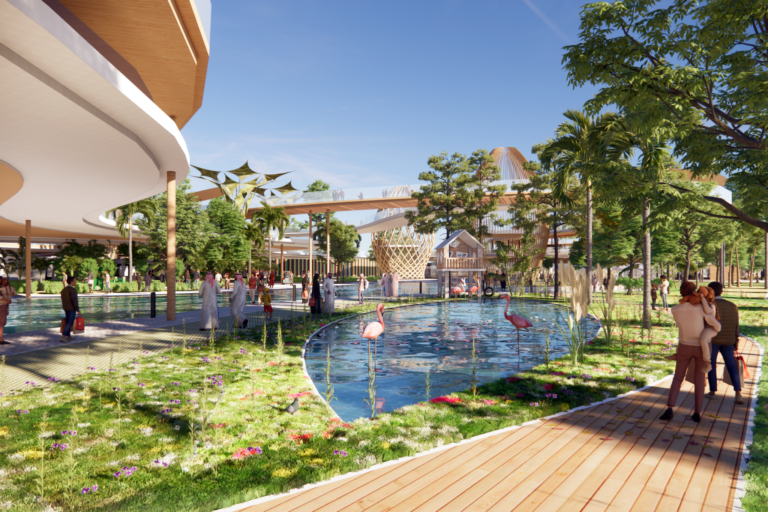
Modern residential planning increasingly focuses on complete neighborhoods rather than isolated homes.
| Planning Feature | Design Impact |
|---|---|
| Mixed-use development | Daily services within walking distance |
| Public open spaces | Better community interaction |
| Parks and green areas | Improved environmental quality |
| Pedestrian networks | Reduced dependence on cars |
| Community facilities | Enhanced social life |
Neighborhood planning has become as important as individual building design.
Changing Residential Typologies
Housing options have become more diverse to meet different household needs.
| Housing Type | Growing Demand |
|---|---|
| Villas | Continued demand |
| Townhouses | Increasing |
| Apartments | Strong growth |
| Mixed residential developments | Expanding |
| Gated communities | Growing |
This diversity provides more choices for different family sizes and budgets.
Sustainability in Residential Design
Environmental performance has become a greater priority.
| Sustainability Strategy | Residential Benefit |
|---|---|
| Improved insulation | Lower energy consumption |
| Efficient glazing | Better thermal comfort |
| Solar shading | Reduced cooling loads |
| Water-efficient landscaping | Lower water use |
| Energy-efficient systems | Reduced operating costs |
Sustainability is increasingly integrated from the earliest design stages.
Climate-Responsive Architecture
Residential projects are placing greater emphasis on responding to local environmental conditions.
| Climate Strategy | Design Benefit |
|---|---|
| Building orientation | Reduced solar gain |
| Shaded outdoor spaces | Improved comfort |
| Courtyards | Better ventilation |
| Deep roof overhangs | Solar protection |
| Natural airflow | Lower cooling demand |
Passive environmental design reduces reliance on mechanical cooling.
Technology and Smart Homes
Digital technologies are becoming more common in residential projects.
| Smart Feature | Function |
|---|---|
| Smart lighting | Energy management |
| Automated climate control | Improved efficiency |
| Smart security systems | Enhanced safety |
| Home automation | Greater convenience |
| Energy monitoring | Better resource management |
Technology is improving both comfort and operational efficiency.
Privacy and Contemporary Living
Traditional cultural values continue to influence residential planning.
| Privacy Strategy | Design Outcome |
|---|---|
| Separate guest areas | Better hospitality |
| Private family zones | Improved daily living |
| Screened outdoor spaces | Greater usability |
| High-level windows | Daylight with privacy |
| Layered circulation | Reduced visual exposure |
Modern homes continue to balance openness with family privacy.
Construction Innovation
New construction methods are helping deliver housing more efficiently.
| Innovation | Benefit |
|---|---|
| Prefabricated components | Faster construction |
| Digital design tools | Better coordination |
| Building Information Modeling (BIM) | Reduced errors |
| Modern construction materials | Improved performance |
| Industrialized building systems | Greater consistency |
Innovation supports both quality improvement and faster project delivery.
Community Amenities
Residential developments increasingly include shared facilities.
| Amenity | Community Benefit |
|---|---|
| Parks | Recreation |
| Walking paths | Health and mobility |
| Sports facilities | Active lifestyles |
| Schools | Family convenience |
| Retail services | Reduced travel needs |
These amenities improve neighborhood quality and daily convenience.
Common Design Challenges
| Challenge | Architectural Response |
|---|---|
| Rapid urban growth | Efficient land use |
| High temperatures | Passive cooling strategies |
| Population growth | Higher residential density |
| Water conservation | Efficient landscape design |
| Transportation | Walkable communities |
Addressing these challenges requires coordinated urban planning and architectural design.

Future Residential Trends
Residential architecture in Saudi Arabia is expected to continue evolving through
• More sustainable communities
• Increased use of smart technologies
• Greater housing diversity
• Improved public spaces
• Higher environmental performance
These trends support long-term urban resilience and quality of life.
Conclusion
Vision 2030 is reshaping residential architecture in Saudi cities by moving beyond the traditional focus on individual homes toward integrated, sustainable, and people-centered communities. Housing developments increasingly emphasize environmental performance, technological innovation, diverse housing options, and well-designed public spaces.
As Saudi cities continue to grow, residential architecture is becoming more adaptable, efficient, and responsive to both modern lifestyles and cultural values, creating neighborhoods that support long-term social, environmental, and economic development.
How Vision 2030 Is Reshaping Residential Architecture in Saudi Cities
Saudi Arabia’s Vision 2030 is transforming residential architecture by promoting sustainable, people centered communities rather than focusing solely on individual homes. New housing developments emphasize diverse residential options, walkable neighborhoods, climate responsive design, smart home technologies, and improved public amenities while maintaining cultural values such as privacy. By combining environmental performance, innovative construction methods, and integrated urban planning, Vision 2030 is creating more efficient, livable, and resilient residential communities that support the Kingdom’s long term social and economic development.