
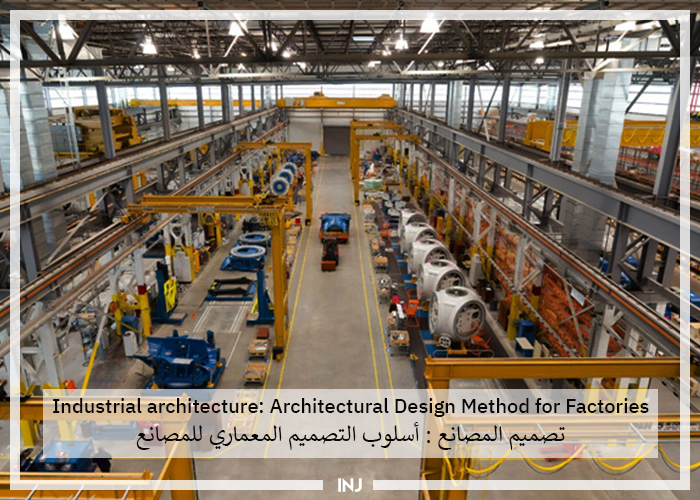
Industrial Architecture: Architectural Design Method for Factories
An effective architectural design method for factories begins with the production process, not the building’s external appearance. The architecture must support the movement of materials, workers, machinery, vehicles, utilities, and waste while maintaining safety, operational efficiency, and the capacity for future change. A factory may appear simple from the outside, but its internal planning depends on careful coordination between architecture, industrial operations, structural engineering, building services, and logistics.
What Is Industrial Architecture?
Industrial architecture is the design of buildings used for manufacturing, processing, assembly, storage, maintenance, and related operational activities. These buildings may include production halls, warehouses, laboratories, workshops, loading areas, offices, staff facilities, and utility spaces.
Unlike many other building types, a factory is designed around a sequence of operations. Raw materials enter the site, move through one or more production stages, and leave as finished products. The architectural layout must make this sequence direct, safe, and measurable while preventing conflicts between people, vehicles, materials, and hazardous activities.
Understanding the Production Process
Before preparing the architectural plan, the design team must understand what the factory will produce and how production will take place. This requires information about machinery dimensions, operating clearances, material quantities, staff numbers, working shifts, storage periods, maintenance procedures, utility requirements, and expected production growth.
A process-flow diagram can then be translated into a spatial arrangement. It should identify the movement of raw materials, work in progress, finished products, rejected materials, packaging, waste, employees, and service personnel. Where possible, these movements should follow clear routes without unnecessary reversal or crossing.
Selecting the Factory Site
Factory site selection affects construction cost, transportation, environmental performance, and long-term operation. The site should provide suitable access to roads and infrastructure while allowing heavy vehicles to enter, turn, load, and leave without obstructing public traffic.
Topography is also important. A relatively level site can reduce excavation, filling, retaining structures, and complicated vehicle gradients. However, the final decision must be based on a topographical survey, geotechnical investigation, drainage study, utility availability, planning regulations, and the environmental effects of the proposed industrial activity.
Low-lying land or sites exposed to flooding require particular attention. Finished floor levels, external grading, stormwater channels, retention systems, and discharge points must be coordinated so that surface water moves away from production and storage areas.
Factory Master Planning and Zoning
The master plan should divide the site into clear operational zones. These commonly include production, raw-material storage, finished-product storage, loading, administration, employee facilities, utilities, waste handling, maintenance, parking, and security control.
Activities with noise, heat, dust, odor, vibration, or hazardous materials may require separation from offices, staff areas, neighboring properties, and sensitive production zones. The required distance depends on the industrial process, local regulations, fire strategy, and environmental assessment.
Vehicle and Pedestrian Circulation
Heavy vehicles, private cars, forklifts, and pedestrians should not share routes unnecessarily. Separate gates may be provided for logistics and staff, while marked pedestrian paths can connect parking areas, entrances, changing rooms, offices, and production halls.
Loading areas require sufficient maneuvering space, dock positions, weather protection, lighting, drainage, and safe access to storage. The layout must account for the largest expected vehicle rather than relying on the dimensions of smaller everyday deliveries.
Future Expansion
A factory frequently changes after it begins operating. Production lines may expand, machinery may be replaced, and storage requirements may increase. The master plan should therefore reserve logical expansion zones without blocking circulation, utilities, emergency access, or drainage.
Structural bays, service corridors, external roads, and utility networks can be planned to support phased development. This applies the wider principle of designing spaces that adapt to changing needs.
Foundations and Ground Conditions
The foundation system must be selected through structural design supported by a geotechnical investigation. Soil-bearing capacity, settlement, groundwater, chemical exposure, machinery loads, and vibration can all influence whether the project uses isolated footings, strip foundations, raft foundations, piles, or another system.
Assuming a standard soil-bearing value without testing can lead to differential settlement, cracking, machinery misalignment, and expensive operational disruption. The foundation design must also coordinate with underground drainage, process pipes, electrical routes, equipment bases, and future machine installations.
Industrial Floor Design
The factory floor is an operational surface as well as a structural element. Its design depends on machinery loads, storage racks, forklift traffic, impact, abrasion, chemicals, temperature, hygiene requirements, and acceptable floor tolerances.
A typical industrial floor may include a prepared subgrade, compacted base, moisture or vapor barrier where required, reinforced concrete slab, joints, and a suitable surface finish. The exact specification must be determined for the intended process rather than applied uniformly throughout the building.
Heavy or vibration-producing machinery may require independent foundations separated from the general floor slab. Floor joints should also be coordinated with machine positions, storage racks, vehicle routes, and drainage channels. Poorly positioned joints can become recurring points of damage under concentrated traffic.
Structural System and Building Span
Factories often require large column-free areas to accommodate production lines and material handling. Steel portal frames, trusses, reinforced concrete frames, and precast systems are among the structural options available. The appropriate solution depends on the span, building height, fire requirements, crane loads, construction program, local supply chain, and future adaptability.
The most economical structural grid is not always the grid with the fewest columns. Column positions must be coordinated with machinery, loading routes, storage racks, overhead services, and possible production changes. Where overhead cranes are required, their loads, clearances, maintenance access, and supporting structure must be included from the beginning.
Factory Walls and Building Envelope
The building envelope protects production from heat, rain, wind, dust, moisture, noise, and unauthorized access. Wall systems may include concrete blocks, precast concrete panels, insulated metal panels, profiled sheets, or combinations selected according to climate and operational requirements.
Material selection should consider thermal performance, fire behavior, impact resistance, corrosion, cleaning, maintenance, and replacement. Lightweight cladding can provide rapid construction, but its fixings, insulation, joints, and protective coatings must suit the local environment.
External walls should be protected from rising damp, rainwater accumulation, and vehicle impact. Ground levels, damp-proofing, flashings, sealants, and perimeter drainage must form one coordinated system rather than a collection of separate details.
Factory Roof Design
The roof influences structural efficiency, internal temperature, daylight, drainage, fire safety, and maintenance. It may also carry photovoltaic panels, mechanical equipment, smoke vents, skylights, ducts, and suspended services.
Roof slopes and rainwater outlets must be designed for local rainfall conditions. Overflow routes should be included so that blocked outlets do not cause water to accumulate above production areas. Thermal insulation, vapor control, waterproofing, and condensation risk must be considered together.
Safe access is required for cleaning, inspection, and equipment maintenance. Roof walkways, guardrails, anchor points, access hatches, and protected service zones should be planned before equipment is installed.
Daylight and Factory Lighting
Daylight can reduce dependence on electric lighting and improve the quality of the working environment. Rooflights, clerestories, and high-level windows can distribute light into deep industrial spaces, but they must be designed to control glare, solar heat gain, leakage, and maintenance.
Artificial lighting levels should respond to the precision and risk of each task. General circulation, machine operation, inspection, packaging, storage, and maintenance may require different lighting conditions. Emergency lighting and illuminated exit signs must remain visible during a power failure.
Ventilation and the Indoor Environment
Factory ventilation must respond to occupancy and the industrial process. Heat, fumes, dust, moisture, and airborne contaminants may require local extraction at their source in addition to general ventilation.
Natural ventilation through wall openings, roof ventilators, or clerestories may be suitable for some processes and climates. Other facilities require mechanical ventilation, filtration, cooling, pressure control, or specialized exhaust systems. Openings should be protected where necessary against rain, birds, insects, and unauthorized access without restricting the required airflow.
The location of air intakes and exhaust outlets requires careful coordination. Exhausted contaminants should not be drawn back into the building or directed toward neighboring properties, pedestrian areas, or fresh-air intakes.
Doors, Loading Bays, and Access Points
Industrial doors must correspond to the dimensions and frequency of movement through each opening. Sliding, folding, sectional, rolling, and high-speed doors can serve different operational needs. Selection should consider clearance, opening speed, wind resistance, insulation, maintenance, security, and interaction with vehicles.
Goods entrances should not replace the required pedestrian exits. Emergency escape doors must remain identifiable and accessible even when loading operations, stored materials, or parked vehicles occupy nearby areas.
Utilities and Building Services
Factories may require large and highly specific supplies of electricity, water, compressed air, gas, steam, cooling, data, or process chemicals. Service routes should be direct, accessible, protected, and capable of modification without interrupting unrelated areas.
Overhead service distribution can preserve floor flexibility, while service trenches may be appropriate for selected machinery. Each approach has implications for maintenance, hygiene, drainage, fire separation, and future reconfiguration. Utility rooms and external plants must also be accessible for equipment replacement, not merely routine inspection.
Fire Safety and Emergency Planning
Fire strategy must be developed according to the building’s size, occupancy, stored materials, production hazards, and applicable regulations. It may include compartmentation, protected exits, detection, alarms, suppression systems, smoke control, emergency lighting, fire-service access, and safe assembly areas.
Exit routes should remain clear of machinery, stored products, and moving vehicles. Travel distances, exit widths, door operation, and the number of escape routes must be verified during design and protected throughout factory operation.
Worker Safety and Support Facilities
Industrial architecture also shapes the daily experience of employees. Entrances, changing rooms, toilets, prayer spaces, dining areas, rest spaces, first-aid rooms, and administrative offices should be positioned according to staff movement and workplace requirements.
Safe circulation requires adequate visibility, lighting, floor markings, barriers, and separation from machinery and forklifts. Noise, heat, air quality, ergonomics, and access for people with disabilities should be addressed as architectural matters rather than left entirely to operational management.
Waste Management and Environmental Control
Production waste should follow a defined route from the process area to sorting, temporary storage, treatment, or removal. Waste routes should avoid clean production areas, employee entrances, and finished-product dispatch wherever possible.
Depending on the activity, the design may also require containment for spills, separate drainage networks, wastewater treatment, acoustic barriers, dust collection, or controlled storage for hazardous materials. These systems must be coordinated with the site plan and environmental requirements from the earliest design stages.
Common Factory Design Mistakes
- Designing the building before documenting the production process.
- Allowing material, pedestrian, and vehicle routes to cross unnecessarily.
- Using assumed ground conditions without a geotechnical investigation.
- Underestimating machinery loads, vibration, and maintenance clearances.
- Providing insufficient space for loading and truck maneuvering.
- Positioning structural columns without coordinating production equipment.
- Failing to reserve areas for future expansion.
- Concealing utilities where they cannot be maintained or modified.
- Ignoring drainage, waste movement, and environmental controls.
- Treating fire safety as a late addition to an already completed layout.
Architectural Design Process for Factories
- Define the production process, capacity, machinery, staffing, and operational targets.
- Study the site, regulations, access, utilities, climate, topography, and ground conditions.
- Map the movement of materials, products, waste, vehicles, employees, and visitors.
- Prepare the master plan and separate incompatible or hazardous activities.
- Develop the structural grid, floor requirements, equipment foundations, and building envelope.
- Coordinate electrical, mechanical, process, drainage, fire, security, and data systems.
- Test the layout against maintenance procedures, emergencies, and future expansion.
- Complete coordinated construction documents and equipment interface details.
- Verify installations, safety systems, controls, and operational performance before handover.
The contractual responsibilities for design, construction, coordination, and risk should also be clearly defined. The selection of an appropriate procurement approach can be informed by understanding the main types of engineering and construction contracts.
Final Considerations
A successful factory is not simply a large enclosure for machinery. It is an organized operational system in which the site, structure, production sequence, circulation, utilities, safety measures, and working environment function together.
The architectural design method for factories should therefore begin with evidence about how the facility will operate. When architectural decisions follow a clearly documented production process, the building can reduce unnecessary movement, support safer working conditions, simplify maintenance, and adapt more effectively to future industrial change.