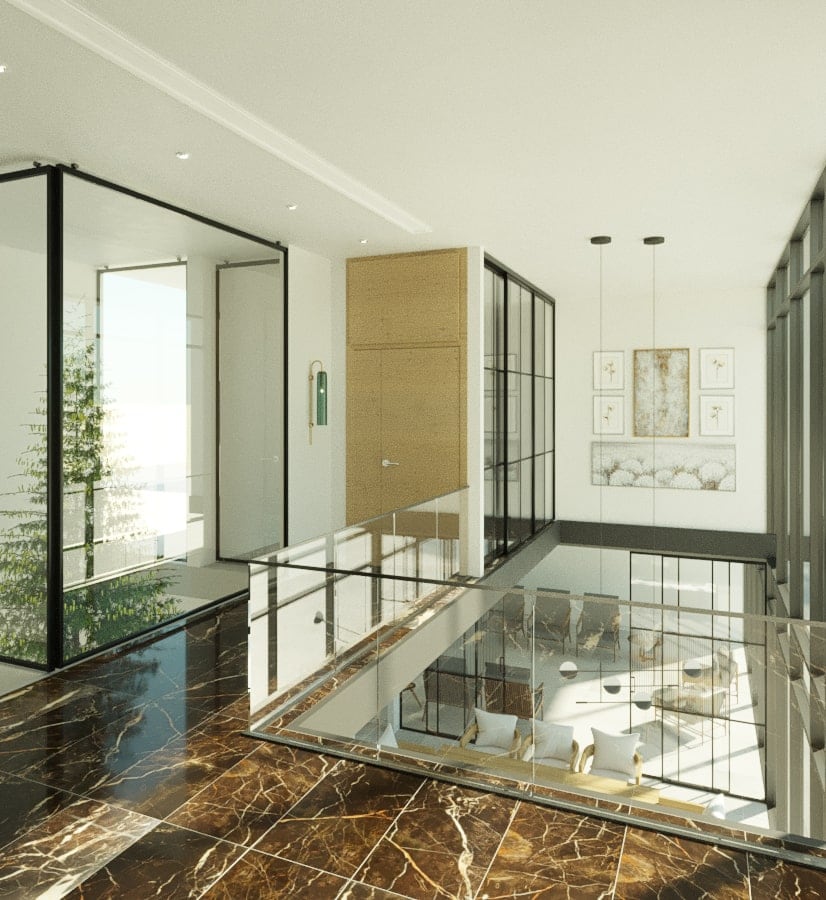
Designing a Double-Height Living Room: Light, Shading and Maintenance
A double-height living room asks the house to give something up: floor area that might otherwise become a room above. That exchange can be worthwhile when it brings daylight deeper into the plan, connects levels or gives a shared room a clear place in family life. Height alone does not make the decision successful.
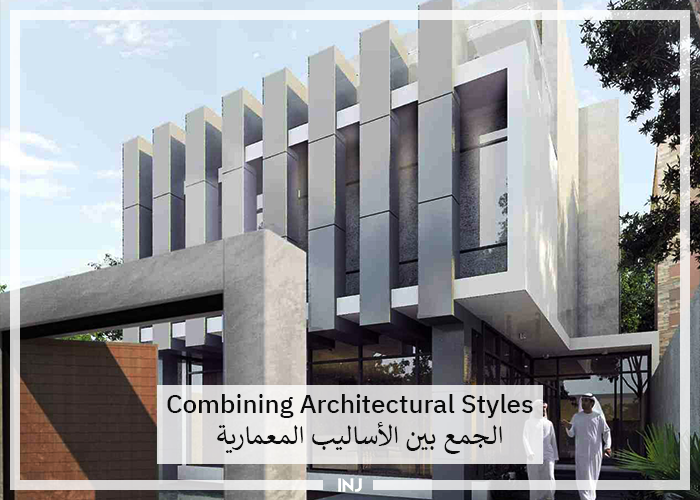
The useful question in double-height living room design is what the extra volume will do. A tall glazed wall, an overlooking gallery and a suspended light each affect the rooms around them. Their consequences should be tested in section alongside the overall design of the villa, before the opening in the upper floor becomes fixed.
Begin with the section, not the ceiling
Compare the room’s width and depth with its height. A narrow space can feel like a shaft even when it is brightly lit; a broad space may gain little from making the entire ceiling taller. A partial opening can sometimes retain an upstairs room while giving the living area a visual connection to another level. These are alternatives to test, not universal proportions to copy.
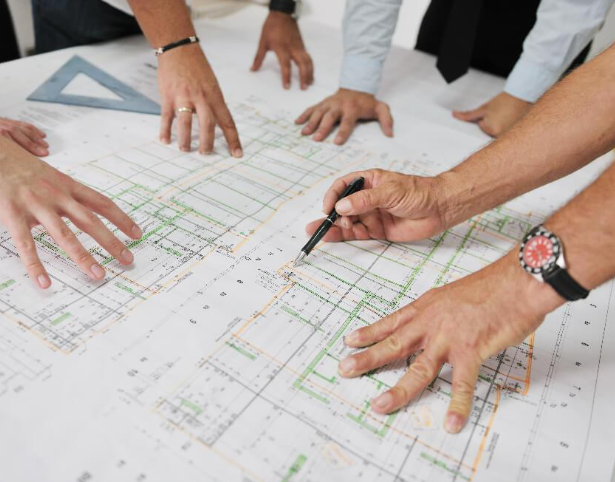
Draw the seated eye level, the edge of the upper floor and the routes people use. Does an upstairs corridor look directly into a family seating area? Can a bedroom door be seen from the entrance? An open section also gives sound a route between floors. The design process should resolve these relationships while the plan can still change.

Tall windows: separate daylight from solar gain
High windows can bring light beyond the perimeter of a room, but more glass does not automatically mean better light. The orientation of the opening, nearby buildings, the depth of the room and the reflectance of its surfaces all matter. Check the places where people read, sit or watch a screen, rather than judging the window only from the entrance.
Daylight and unwanted solar heat arrive through the same opening. External shading, glazing performance and the position of seating therefore need to be considered together. Double glazing describes the construction of the window; it is not another name for a tall or two-storey window. Nor does it, by itself, establish that a particular window suits a hot climate.
Curtains or blinds need a clear position, a way to operate them and access for maintenance. A curtain track hidden at the top of the room can become difficult to repair. These small decisions connect the appearance of the room to its environmental performance.
Cooling and lighting belong to the occupied space
The extra volume changes the conditions the mechanical designer must assess. Air distribution, return-air locations, glazing loads and the position of controls should be coordinated with the section. A taller room does not simply require an arbitrary increase in equipment size; the system needs a design based on the actual enclosure and use.
A pendant can establish a focal point without being responsible for every lighting task. Reading, conversation and movement may need separate sources closer to the occupied level. Review evening scenes as carefully as daylight, including views from the upper gallery. A fitting that looks discreet from below may expose a bright lamp to someone upstairs.

Give tall features a practical purpose
Shelves and planting
A high bookcase should distinguish between everyday storage and shelves that are rarely accessed. Consider how the upper shelves will be reached and cleaned, and how the unit is fixed. A library is useful when books remain accessible; filling an entire wall is not an end in itself.
Planting can soften the view through a tall space, but a living wall introduces irrigation, drainage, light and servicing requirements. A planted enclosure behind glass may provide a visual connection while separating maintenance from the seating area. It still requires access and a suitable environment for the chosen plants.
Fireplaces and focal walls
Where a fireplace is part of the brief, its flue, clearances and servicing must follow the requirements of the selected system and the responsible designer. A continuous chimney breast can organise a tall wall, but its appearance should not conceal the technical work. Similar discipline applies to stone cladding, suspended objects and large artworks: their supports belong in the design from the start.
Plan the room people will actually use
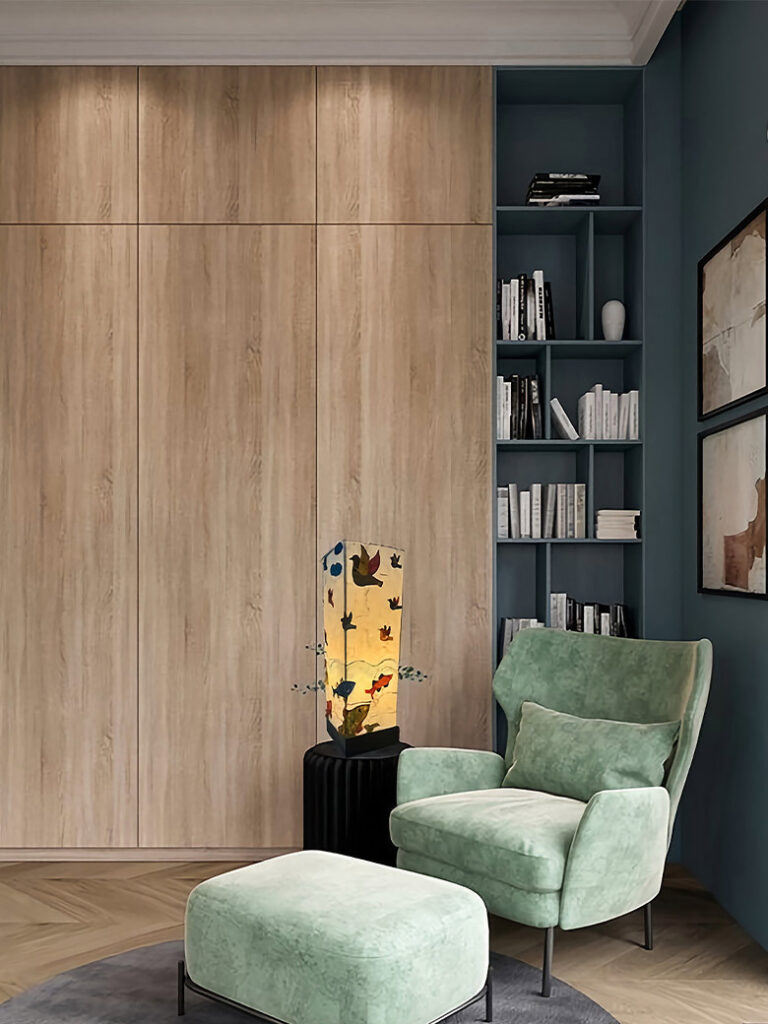
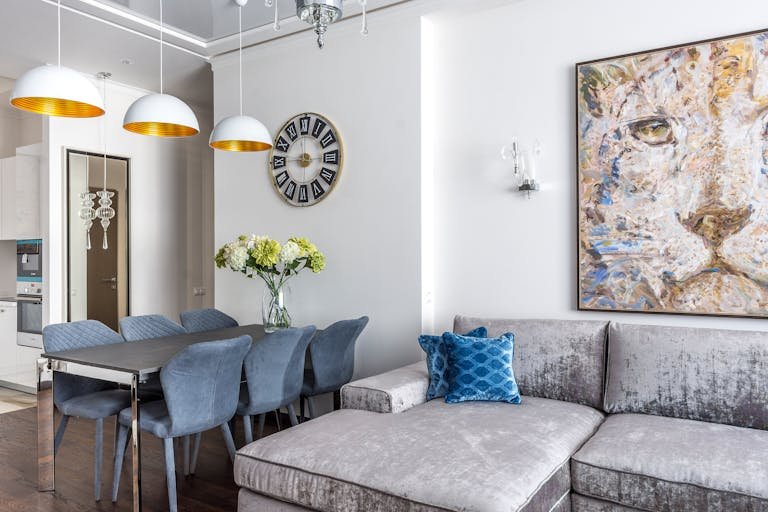
The scale of sofas, curtains and lamps is a separate design question from the performance of the enclosure. Our discussion of furnishing a double-height room considers that relationship in more detail. Coordinating it with interior design prevents the architecture and furniture from becoming two unrelated projects.
Before approving the section, ask how the windows will be cleaned, how a lamp will be replaced, where maintenance equipment can stand and whether the family accepts the visual and acoustic openness. The strongest reason to retain a double-height living room is a clear improvement in daily use. When those benefits are uncertain, a smaller opening or a room of ordinary height remains a legitimate design choice.
Related reading: double-height living room · Sensorial architecture: Influence of the Senses in Architecture · Sustainable design in residential projects.