
Architect vs Engineer: Who Designs What in a Building?
Who plans the rooms, calculates the structure and designs the air-conditioning and electrical systems? The difference between an architect and an engineer becomes clearer when these tasks are mapped to the people responsible for them. Architectural Engineer needs particular care: it can describe a building-engineering discipline, while the corresponding Arabic expression is also commonly used for an architect.
An architect develops the spatial and conceptual direction of a building. An architectural engineer focuses more closely on building performance, technical integration, and the relationship between design and engineering systems. The word engineer, meanwhile, is a broad professional category that includes structural, civil, mechanical, electrical, geotechnical, and other disciplines.
The Difference in Brief
Architect: shapes the space, form, function, and relationship between the building, its users, and its site.
Architectural Engineer: focuses on building performance, technical systems, energy efficiency, environmental comfort, and constructability.
Engineer: a broad term covering several independent disciplines, including structural, civil, mechanical, and electrical engineering.
Why Are These Titles Often Confused?
Part of the confusion comes from translation. In many Arabic-speaking countries, the expression “architectural engineer” is commonly used to describe a practicing architect, even when the English professional title would simply be Architect.
In international academic and professional contexts, however, Architectural Engineer may refer to a different discipline. Architectural engineering programs often place greater emphasis on building systems, environmental performance, structural coordination, façades, energy, and construction technology.
The distinction is further complicated by universities. Some schools award degrees in architecture, while others award degrees in architectural engineering. Professional licensing systems also vary between countries. For this reason, the degree title alone does not always explain what a person is legally qualified to design, approve, or supervise.
The definitions in this article describe the general functional differences between the professions. Legal responsibilities should always be understood according to the regulations and licensing system of the country in which the project is located.

Who Is an Architect?
An architect is the professional who develops the central spatial and design idea of a building. The process begins with people: who will use the building, what they need, how they will move through it, and how the project should respond to its location, climate, budget, and regulations.
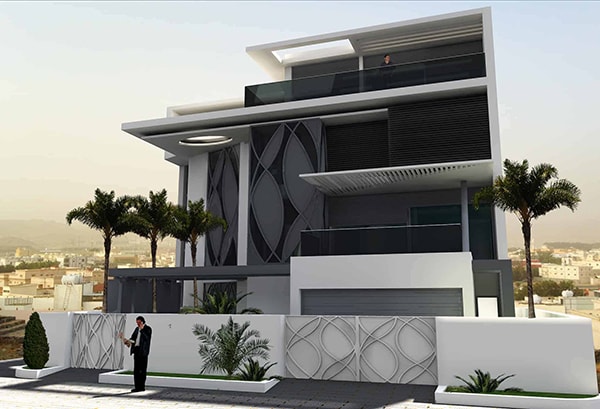
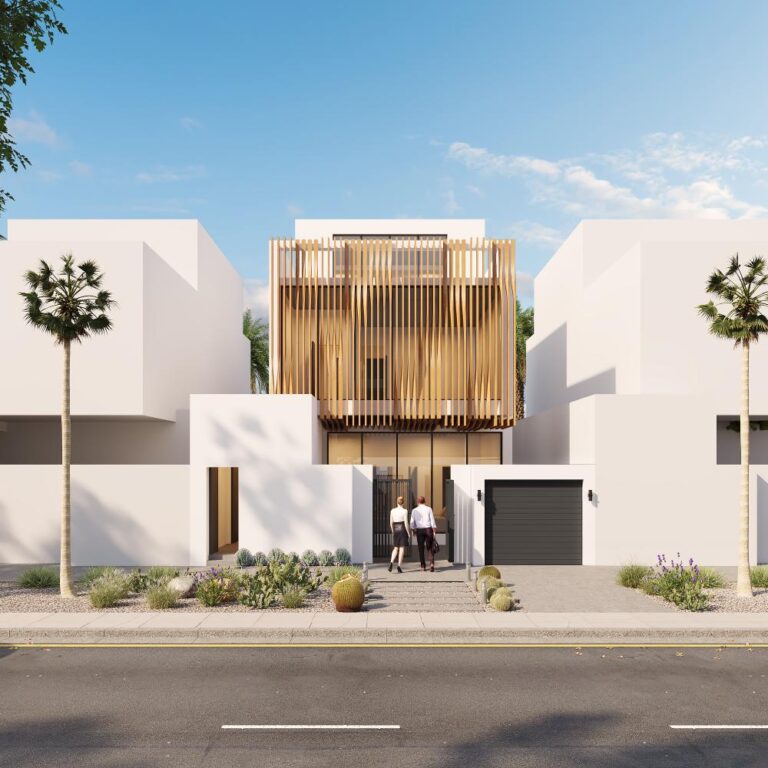
The architect then translates these conditions into a spatial arrangement and architectural form. This includes the relationship between rooms, circulation routes, entrances, façades, outdoor spaces, light, privacy, materials, scale, and the building’s connection to its surroundings.
Architecture is therefore not limited to drawing elevations or choosing finishes. It is the process of organising human activity into a built environment that is functional, coherent, and meaningful.
What Does an Architect Do in the Design Office?
- Analyses the site, regulations, and project brief.
- Develops the architectural concept and overall building form.
- Plans the internal and external spaces.
- Organises circulation, entrances, privacy, and user movement.
- Designs façades and selects the architectural material direction.
- Prepares plans, sections, elevations, models, and design presentations.
- Coordinates with structural, mechanical, electrical, and specialist engineers.
- Reviews how technical systems affect the architectural concept.
- Explains the project to the client, authorities, consultants, and contractor.
What Does an Architect Do on Site?
Where included in the appointment, the architect reviews during construction whether the work reflects the approved design intent. This may include checking dimensions, materials, finishes, façade samples, mock-ups, spatial proportions, and details that affect the final appearance or user experience.
The architect may also respond to site conditions and coordinate modifications when technical conflicts arise. This does not mean that the architect performs structural calculations or designs the mechanical and electrical systems. Those responsibilities belong to the relevant licensed engineers.
Who Is an Architectural Engineer?
An architectural engineer works at the point where architectural design meets building science and engineering. The role is concerned with how the building performs technically, not only with how it looks or how its spaces are arranged.
Depending on the education system and professional context, an architectural engineer may focus on energy efficiency, thermal comfort, daylight, acoustics, façade systems, building services coordination, sustainability, construction technology, or the technical integration of complex buildings.
In some practices, the architectural engineer works alongside the architect. In others, the role may be located within a multidisciplinary engineering consultancy, a façade engineering team, a sustainability unit, or a building-performance department.
Typical Areas of Architectural Engineering
- Thermal and energy-performance analysis.
- Building-envelope and façade performance.
- Daylight, acoustics, and environmental comfort.
- Coordination between architectural and engineering systems.
- Technical review of architectural details.
- Building Information Modelling and multidisciplinary coordination.
- Constructability and construction-system analysis.
- Review of technical-code compliance.
- Operational efficiency and long-term building performance.
The architectural engineer does not replace the architect, structural engineer, mechanical engineer, or electrical engineer. The role is typically concentrated in the technical area where these disciplines meet.
Who Is an Engineer?
The word engineer does not describe one profession. It is a broad category covering specialists who use mathematics, science, analysis, and technical standards to design structures, systems, infrastructure, and machines.
In a building project, there is rarely one engineer who designs the structure, air-conditioning, drainage, electrical power, lighting, and fire systems. Each area is normally assigned to a qualified specialist.
Main Engineering Disciplines in Building Projects
- Structural engineer: designs the load-bearing system and checks how loads are transferred safely to the foundations.
- Civil engineer: may design site works, roads, grading, drainage, utilities, and external infrastructure.
- Mechanical engineer: designs heating, ventilation, air-conditioning, water, drainage, and sometimes fire-protection systems, depending on the project.
- Electrical engineer: designs power, lighting, communications, and low-current systems.
- Geotechnical engineer: studies soil conditions, foundations, settlement, and ground behaviour.
- Façade engineer: develops the structural, thermal, water, and installation performance of the building envelope.
- Fire engineer: studies evacuation, fire strategy, smoke control, and protection requirements.
Who Is a Structural Engineer?
A structural engineer is one of the central specialists in a building project, but the title is not interchangeable with the general word engineer. The structural engineer is responsible for the system that carries the building and transfers its loads safely to the foundations and the ground.
This includes selecting an appropriate structural system, such as reinforced concrete, steel, timber, masonry, or a composite system. The structural engineer then calculates columns, beams, slabs, walls, foundations, and other load-bearing elements according to the project geometry, loading conditions, soil information, and applicable code.
The structural engineer does not normally design the air-conditioning, plumbing, electrical, or lighting systems. Those systems belong to the relevant mechanical and electrical disciplines, although they must be coordinated with both the structure and the architecture.
Architect vs Architectural Engineer vs Structural Engineer
| Aspect | Architect | Architectural Engineer | Structural Engineer |
|---|---|---|---|
| Primary focus | Space, form, function, and user experience | Building performance and technical integration | Structural safety and load transfer |
| Starting point | Site, programme, users, and design concept | Performance criteria and technical systems | Architectural geometry, loads, and soil conditions |
| Main outputs | Plans, sections, elevations, details, and design documentation | Performance studies, coordination models, technical reports, and system analysis | Structural calculations, drawings, schedules, and details |
| Core question | How should the building be used, experienced, and understood? | How can the building perform efficiently and integrate its systems? | How can the building stand safely and resist loads? |
| Role on site | Reviews compliance with architectural intent and materials | Reviews system integration and technical performance | Reviews structural construction against approved drawings |
How Do These Professionals Work Together?
Consider a typical building project. The architect begins by organising the programme, defining the spatial relationships, and establishing the overall form and relationship to the site.
The structural engineer then develops a load-bearing system capable of supporting that design. Mechanical and electrical engineers design the systems required to make the building usable, comfortable, safe, and operational.
An architectural engineer may analyse the façade, energy, daylight, acoustics, environmental comfort, and coordination between these systems. The architect then reviews how the technical decisions affect the spatial and visual integrity of the project.
A successful building does not result from one discipline defeating another. A design that ignores structural logic may become difficult or uneconomical to build. A structural solution that ignores space may damage the architecture. A mechanical system introduced too late may compromise ceilings, façades, and room proportions.
The quality of the final building depends on early and continuous coordination.
Is an Architect an Artist or an Engineer?
Describing the architect only as an artist understates the technical and organisational responsibilities of the profession. Describing the architect only as an engineer overlooks the spatial, cultural, and human dimension of architecture.
Architectural practice combines design, analysis, construction knowledge, regulation, coordination, budget awareness, and responsibility toward users and place.
An architect needs imagination, but also an understanding of materials, structure, building systems, codes, cost, time, and maintenance. A project is not successful merely because it produces an attractive image. It must also become a coherent, usable, buildable, and durable place.
Is an Architectural Engineer the Same as an Architect?
Not always. In some countries and languages, the terms may be used as though they describe the same professional. In international academic practice, however, Architect and Architectural Engineer may refer to different disciplines.
The architect normally leads spatial design, form, programme, and user experience. The architectural engineer usually places greater emphasis on technical performance, building systems, environmental analysis, and constructability.
Some professionals may work across both areas because of their education and experience, but their legal authority still depends on local licensing and regulation.
Is the Architect Responsible for the Structure?
The architect is responsible for coordinating the architectural design with the structural system, but does not normally replace the structural engineer in performing calculations or signing structural designs.
The architect defines the spatial requirements and architectural intent. The structural engineer then develops a system capable of achieving that intent safely and efficiently. Columns, spans, walls, and floor systems may be adjusted through this dialogue until the team reaches a balanced solution.
Who Should a Client Appoint First?
For a new house, villa, office, commercial building, hospitality project, or public building, the process often begins with an architect or an architectural consultancy. The architect helps define the brief, understand the site, organise the programme, and establish the design direction.
The wider engineering team is then appointed according to the scale and complexity of the project. In many cases, one multidisciplinary consultancy may provide architectural, structural, mechanical, electrical, and coordination services under a single agreement.
Some projects begin differently. A structural engineer may be the first professional required when the task involves assessing an existing structure, investigating cracks, strengthening a building, correcting settlement, or designing a bridge or civil structure.
The more useful question is therefore not simply, “Do I need an architect or an engineer?” It is: “What type of project is this, who should lead it, and which specialists must be involved from the beginning?”
A Practical Note for Clients
Do not appoint a consultant on the basis of a title alone. Ask about education, professional licence, scope of responsibility, previous work, contractual role, and which disciplines will be provided directly or through subconsultants. Clear responsibility at the beginning of a project prevents confusion later.
Does the Colour of a Hard Hat Identify the Profession?
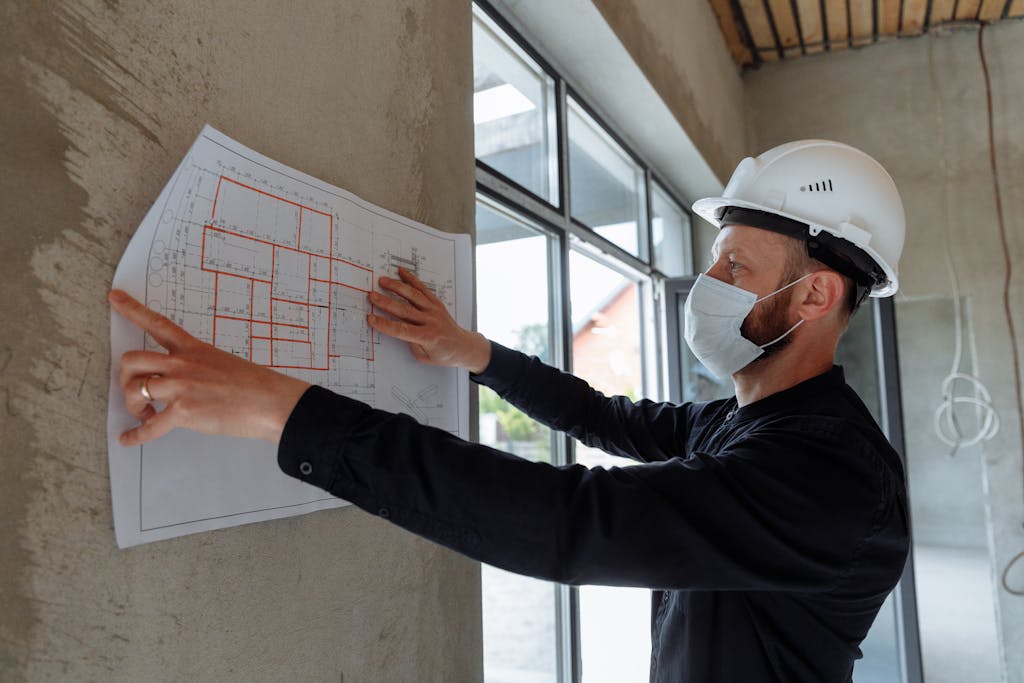
There is no universal rule stating that architects wear white hard hats, engineers wear yellow, or architectural engineers wear blue. Hard-hat colour systems vary between contractors, projects, countries, and safety policies.
Some projects use colours to distinguish management, supervisors, workers, safety staff, visitors, or subcontractors. The colour should not be treated as proof of a person’s profession, qualification, or authority. The reliable references are the site identification card, job title, appointment, and approved scope of responsibility.
Frequently Asked Questions
What is the difference between an architect and an architectural engineer?
An architect normally leads spatial design, form, programme, and user experience. An architectural engineer generally focuses more on building performance, systems integration, technical analysis, and constructability.
Can an architect design the structure?
An architect coordinates the design with the structural system, but structural calculations and structural design are normally carried out and approved by a qualified structural engineer.
Does a structural engineer design air-conditioning and electrical systems?
No. The structural engineer designs the load-bearing system. Air-conditioning, plumbing, and related systems are designed by mechanical engineers, while power, lighting, and communication systems are designed by electrical engineers.
Who designs the building façade?
The architect normally leads the design of the façade, including its composition, materials, openings, scale, and relationship to the building. Structural engineers, façade engineers, suppliers, and contractors then contribute to its technical development, performance, and installation.
Who is responsible for building safety?
Responsibility is divided by discipline and contract. The structural engineer is responsible for structural safety within the structural scope. Mechanical, electrical, fire, and other engineers are responsible for their systems. The architect coordinates the architectural requirements with these technical disciplines according to the project agreement and local regulation.
Do I need both an architect and engineers?
In most building projects, yes. The architect leads the spatial and architectural design, while specialist engineers develop the structure and technical systems. A multidisciplinary consultancy may provide all of these services within one coordinated team.
How should the responsibilities be recorded?
A schedule of deliverables explains the work more clearly than a title alone. For each package of drawings or studies, identify who prepares it, who reviews it, who coordinates it with other information and what inputs are required. Coordination should not be assumed to transfer technical design responsibility away from the appointed specialist.
Consider a change to an opening in a façade. The architect may review composition and privacy, the structural engineer its effect on load-bearing elements, and the envelope specialist the performance of the junction. Record the decision and follow it through the affected documents. Construction project management supports that process during delivery, while sustainability and performance studies extend the questions to energy, comfort and service life.
This process draws on the architect’s communication and coordination skills, but its outcome is assessed through the design’s performance in use. Defined roles support the work of the project rather than merely differentiating professional titles.
Conclusion
An architect, an architectural engineer, and an engineer should not automatically be assumed to describe the same role; terminology varies with language and education systems. The architect shapes the space, form, function, and experience of the building. The architectural engineer concentrates on performance and technical integration. The term engineer covers several independent disciplines, including structural, civil, mechanical, and electrical engineering.
The real distinction becomes visible as soon as a project begins. Architecture cannot ignore structure and building systems, while engineering cannot operate independently of space, use, and design intent. A successful building is the result of a continuous exchange between architectural vision, engineering analysis, and construction.
To understand how projects move from early concept to construction, explore How We Work, or view the built work of INJ Architects.
Read also: Types of Engineering Contracts and the Main Construction Contract Models.