Architectural Photography: How a Building Becomes an Image
A significant building exists twice. It exists first as a physical fact of stone, concrete, glass and shifting shadow, a place that only a limited number of people will ever walk through in their lifetime. It exists a second time as an image that travels, reproduced in journals, archives and feeds far from the site itself. Because the second life reaches so many more eyes than the first, architectural photography is never a neutral record. It is the medium through which most buildings enter public memory, and the discipline of making that image carries a responsibility that is easy to underestimate.
Understood this way, the photographer is not merely documenting a structure but proposing how it should be understood. A single frame decides which approach a viewer takes, which proportions feel commanding, and which details are allowed to speak. For a practice whose work addresses civic, governmental and institutional briefs, where the building is meant to convey permanence and public trust, the honesty and intelligence of that image matter as much as the design behind it. The rest of this essay treats architectural photography as a way of seeing rather than a list of settings, and its practical companion on controlling verticals and light in the field is set out in our guide to photographing a building on site.
Architectural Photography as a Way of Seeing
The discipline begins with patience. Unlike reportage or sport, where the decisive moment arrives and is gone, a building holds still and asks the photographer to study it. The work is slow, contemplative, spent walking a facade at different hours and waiting for the light to describe a surface the way the architect intended. This temperament is visible in the figures who defined the field. Julius Shulman, whose photographs of the Case Study Houses in Los Angeles, including the celebrated view of Pierre Koenig’s Stahl House cantilevered over the city at dusk, taught a generation to desire modern living through a single image.
Ezra Stoller approached the problem with almost architectural rigour, photographing the Seagram Building, the TWA Flight Center and Frank Lloyd Wright’s Guggenheim with such authority that his images became the canonical way those works are remembered. Helene Binet, working largely with film rather than digital capture, has photographed the buildings of Peter Zumthor, Zaha Hadid and Daniel Libeskind by concentrating on fragment, shadow and the slow passage of light across a wall. What unites these photographers is not equipment but attention. Each decided what a building was about and then built an image around that argument.
Composition, Light and the Discipline of the Frame
Composition in architecture is the act of imposing a reading. Where the eye enters the frame, which line it follows, and where it comes to rest are all decisions, not accidents. Strong architectural images tend to rely on the building’s own geometry, letting a colonnade, a stair or a run of mullions become the leading line that carries the viewer inward. Symmetry can lend a civic building its sense of order and address, while a deliberately oblique view can restore tension and movement to a form that would look inert head on. The frame is a kind of editing, and what the photographer chooses to exclude is as expressive as what remains.
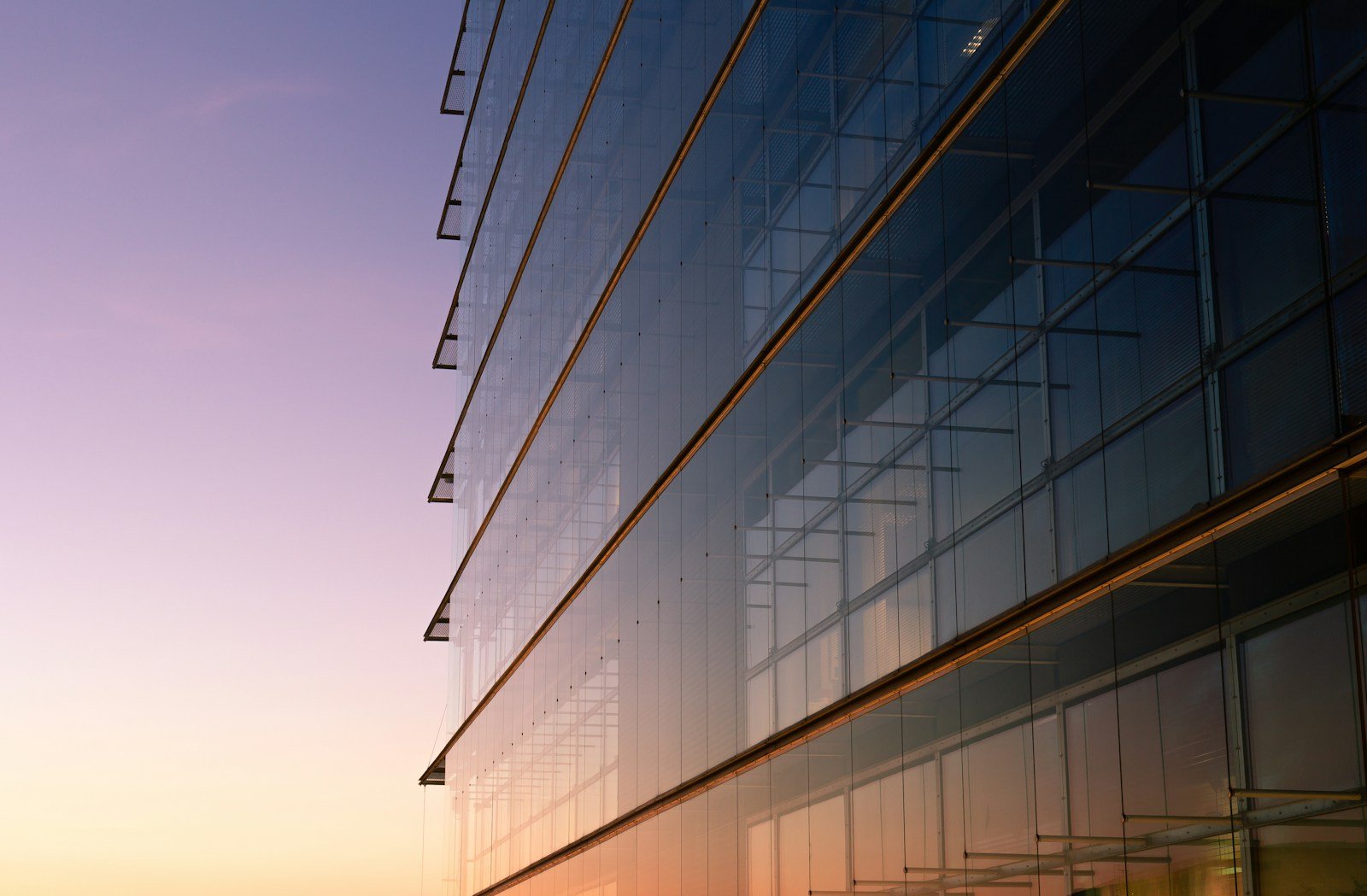
Light is the second author of the image. A facade reads as flat and lifeless under a midday sun and then, an hour later, acquires depth as raking light rediscovers every reveal and joint. The behaviour of daylight on material is so central to how a building is perceived that it belongs to design itself, a theme we explore in our writing on designing for emotion through light, sound and texture and on the advantages of natural light in buildings. To photograph a building well is to understand how its surfaces were meant to meet the sun, and then to wait for the moment when they do.
Vertical Correction and the Ethics of the True Image
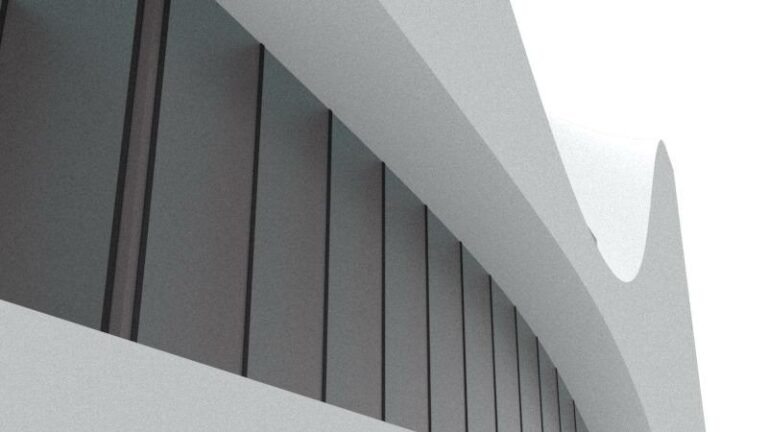
One technical concern sits at the heart of the discipline because it touches on honesty. When a camera is tilted upward to take in the full height of a building, the vertical lines converge and the structure appears to lean backward and taper, an effect the eye does not accept as true. Correcting this convergence, historically with the movements of a large format view camera and today with a tilt and shift lens or careful work in software, restores the verticals to the parallel state in which we actually experience them. The correction is not a cosmetic trick. It is an attempt to render the building as the body knows it, upright and stable.
That commitment to fidelity marks the moral edge of the field. Post production can deepen a sky, lift a shadow or lengthen a building’s apparent reach, and each adjustment inches the image further from the lived fact of the place. The question a serious photographer asks is whether an edit clarifies the building or flatters it into something it is not. An image that promises a grandeur the visitor will never find betrays both the viewer and the architect. The ethics of representation, especially for public and institutional work where credibility is the whole point, ask the photograph to be persuasive without being dishonest.
The Photograph as a Building’s Public Life
Once a building is published, its image begins a career of its own. The photograph is what wins the commission, what the client circulates, what the historian inherits, and often what outlives the building when it is altered or demolished. Many celebrated works of the twentieth century survive chiefly as photographs, and our collective sense of them has been shaped more by a handful of frames than by any visit. The photographer therefore writes the first and most durable chapter of a building’s reception, which is why architecture practices treat image making as part of the work rather than an afterthought, a view reflected across our architecture journal.
To take architectural photography seriously is to accept that representation is not separate from architecture but continuous with it, the final act in which a building is explained to a world that will mostly never enter it. The camera does not simply record what the architect built; it decides what the building will be allowed to mean.