Making the Most of a Small Living Room
A small living room is not a problem to be apologised for but a design question to be answered well. The sense that a room is generous has less to do with its measured area than with how that area is organised, lit and perceived, and a modest space handled with intelligence can feel more expansive and more comfortable than a large one handled carelessly. The discipline of living well in a limited footprint is, in miniature, the discipline of architecture itself, the making of the most from what one has.
Perception Before Square Metres
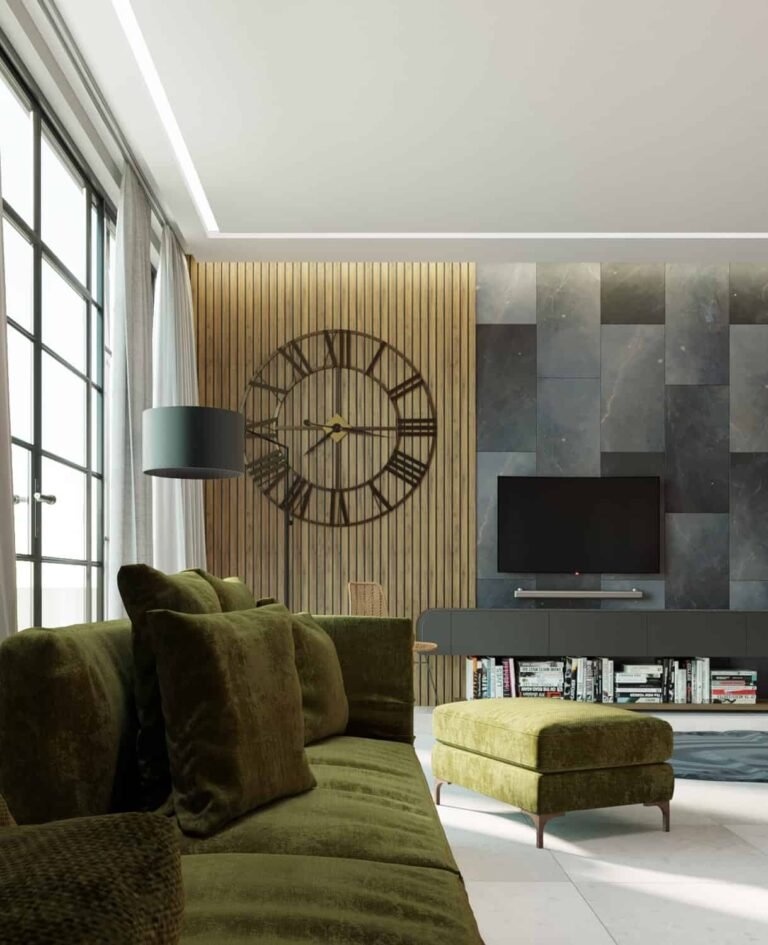
Much of the impression of spaciousness is a matter of perception rather than fact, a point the anthropologist Edward T. Hall established in The Hidden Dimension in 1966, where he showed that our reading of space is a constructed sensory experience rather than a simple measurement. The eye judges a room by the clues it is given, and those clues can be composed. Furniture raised on exposed legs, for instance, lets the floor plane run continuously beneath it, and that visible stretch of uninterrupted ground reads to the eye as openness, which is why a sofa or console that sits lightly above the floor makes a room breathe where a heavy skirted piece would press it down.
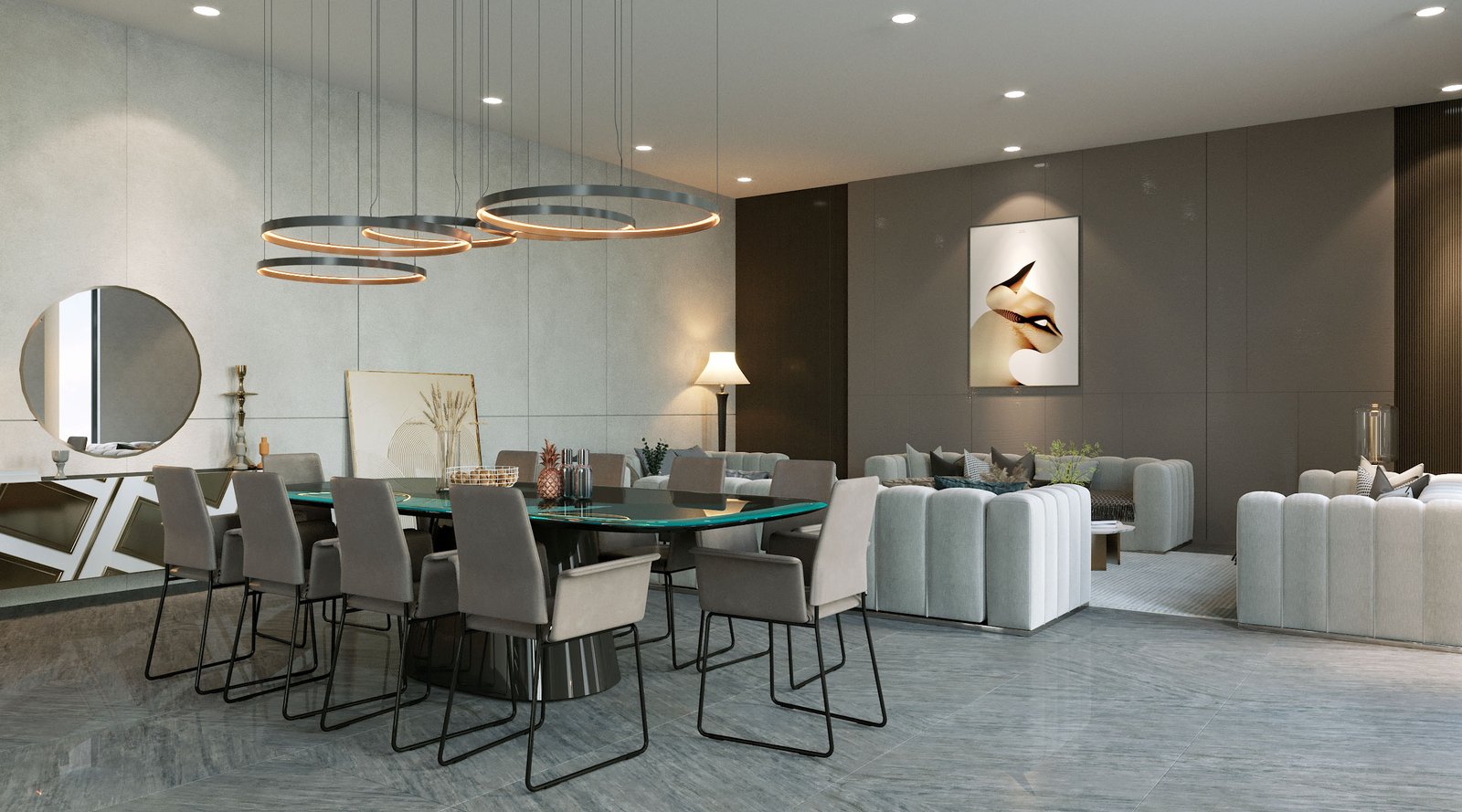
Sightlines matter as much as floor area. A room feels larger when the eye can travel to its far edges and corners without obstruction, so keeping the centre of the plan clear and ranging the furniture toward the walls preserves the long diagonal view that the mind reads as depth. Transparency helps in the same way, which is why glass, open frames and low pieces that the gaze passes over keep a space feeling continuous where a tall solid cabinet would wall it off. The traditional Japanese sensibility of ma, the active appreciation of empty space as a positive element rather than a mere absence, is instructive here, for emptiness is not waste but the very quality that makes a room feel ample.
Light, Height and the Vertical Plane
Light enlarges. A room generously supplied with daylight feels bigger than an identical room kept dim, and unobstructed windows, pale and reflective surfaces, and a well-placed mirror that returns light and doubles a view all work to expand the apparent volume. Colour contributes in the same register, since a restrained and tonal palette lets surfaces blend into one another and dissolves the hard boundaries that chop a small space into smaller fragments.
The vertical dimension is the reserve that small rooms most often neglect. Drawing the eye upward with tall shelving, with curtains hung close to the ceiling rather than the window head, and with storage that climbs the wall recruits height to compensate for a want of breadth, and it moves possessions off the floor, where every object left standing erodes the sense of openness. Francis Ching, in his widely used account of form, space and order, reminds designers that a room is a three-dimensional volume and not merely a plan, and the vertical plane is where a small room finds its hidden generosity.
Furniture That Works Twice
When floor area is scarce, each piece should ideally earn its place more than once. An ottoman that opens for storage, a console that unfolds into a dining table, a bench that conceals what the room must hold but need not display, all allow a single footprint to serve several functions, so that the room adapts to the hour and the occasion rather than standing fixed. Choosing fewer and better pieces, each correctly scaled to the room rather than crowding it with many small objects, does more for the sense of space than any rearrangement, for clutter is the true enemy of a small room and restraint its surest ally.
These principles are not tricks so much as a way of thinking, the same way of thinking that governs the design of any fine building at any scale. At INJ Architects we hold that a space is not measured by its dimensions but by the quality of life it makes possible, and the well-designed small room is the quiet proof that generosity is a matter of judgement long before it is a matter of size.