
How Islamic Architecture Inspires Contemporary Design
Contemporary architecture prizes newness, and it often treats the past as something to break away from. Both the modern and contemporary movements largely defined themselves against what came before, and the result has too frequently been novelty without meaning. Islamic architecture offers a different proposition. Its character flows from a body of principles rather than from a single period or place, and because of this it has a rare capacity to inspire contemporary design without collapsing into mere imitation of history.
The reason lies in the nature of the tradition itself. Islamic building does not belong to one century or one country but has expressed itself across North Africa, the Iberian peninsula, Anatolia, Persia, the Indian subcontinent and the Arabian heartland, adapting its common ideas to each climate and culture. That is why the Great Mosque of Cordoba, the Selimiye Mosque that Mimar Sinan raised at Edirne and the Taj Mahal built under Shah Jahan can look so different while sharing an unmistakable family resemblance. For architects working today, that adaptability is the most useful inheritance of all.
Principles That Still Guide Design
Several enduring principles sit beneath the surface of the style. The first is authenticity, which here does not mean originality for its own sake but a faithfulness to local tradition that stops short of copying the past. The second is an openness to innovation, since the Quran encourages study and inquiry, so the tradition has always absorbed the best available building technology without abandoning tested practice. Held together, continuity and innovation open an almost endless field of possibility, allowing a building to keep both the identity of its place and the spirit of its time.
A third principle concerns local materials, techniques and geography. Many contemporary buildings sit awkwardly in their surroundings because they imitate imported ideals without regard for place, whereas the historic mosques of Cordoba and Edirne used local geometry, materials and craft to express order and unity in their own particular voice. A fourth principle is a concern for the people who use a building, and a fifth is the balance between the celestial and the earthly, in which intricate patterning gives a space its soul while simplicity and practicality give it its strength.
The House and the Courtyard
Domestic architecture carried these ideas into daily life. The idea often described as al jiwani, the provision of all of life’s amenities within the house, produced dwellings turned inward around a central courtyard. That courtyard linked the rooms, framed a piece of open sky and brought greenery, light and air into the heart of the home, so that the household could enjoy a private outdoor world without stepping beyond its own walls. It is a model of privacy and generosity at once, and it reads as strikingly relevant to the way many families in the region still wish to live.
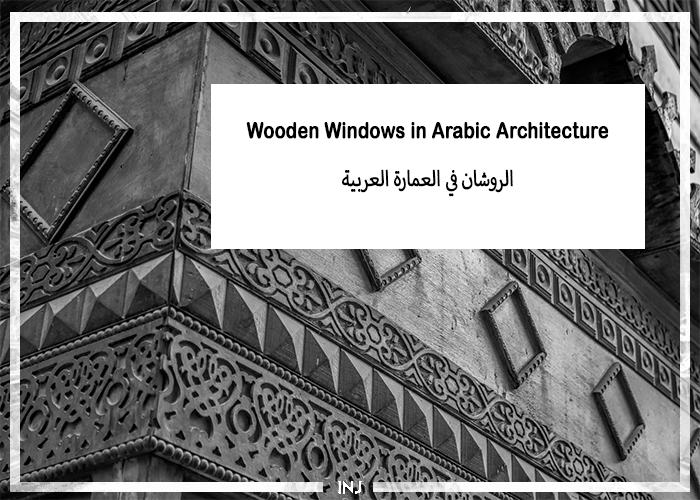
The tradition answered a hard climate with architecture rather than machinery. Most of the Islamic world lies in hot and arid zones, yet builders achieved comfort through the structure itself. Wind catchers, known in the region as malqaf or barjeel, were raised to capture the moving air above the rooftops and draw cooled ventilation down into the interior, while the carved wooden screens called mashrabiya filtered harsh light and preserved privacy without closing a room off from the breeze. These are, in effect, passive cooling strategies of real sophistication, and our discussion of sustainability in design shows how directly they speak to present concerns.
How Islamic Architecture Inspires Contemporary Design
The influence is visible wherever architects treat this heritage as a living language rather than a museum piece. In Paris, Jean Nouvel’s Institut du Monde Arabe wrapped a facade in mechanised metal screens that recall the geometry of the mashrabiya while responding to daylight, and his later dome at the Louvre Abu Dhabi filters the sun into a shifting rain of light drawn from the same tradition. In Riyadh, the King Abdullah Petroleum Studies and Research Center by Zaha Hadid Architects composes a honeycomb of crystalline cells that echo Islamic tessellation at the scale of an entire campus.
In Saudi Arabia this dialogue has become a matter of national purpose. The restoration of historic Diriyah, the rebuilding of the Qasr Al Hokm district in the Najdi style and the care taken over the expansion of the holy mosques all treat traditional form as a foundation for contemporary work rather than an obstacle to it. The ambition set out under Vision 2030 asks new buildings to feel unmistakably of their place, and the deeper study of how heritage and modern technique can meet runs through our writing on blending tradition and modernity in Arabian and Islamic design and on the development of urban architecture in the Kingdom.
Light, Water and the Geometry of Pattern
Beyond plan and climate, Islamic architecture developed a sophisticated language of surface and atmosphere that contemporary designers continue to mine. Geometric tiling, the honeycombed vaulting known as muqarnas and bands of calligraphy were never mere decoration but a way of expressing order, infinity and the unity of creation on the body of the building. Water played an equally deliberate role, from the still reflecting pools of the Alhambra to the quartered charbagh gardens of the Mughal courts, cooling the air and composing space through sound and reflection. Nothing in the building was arbitrary, and the discipline of that intention is what still rewards close study.
These devices translate readily into modern practice. A perforated screen can be generated from a historic geometric rule and then cut by machine, a courtyard pool can moderate temperature as well as mood, and a pattern of light falling through a pierced vault can give a plain concrete interior a sense of occasion. The lesson is not to reproduce the Alhambra but to understand why its surfaces work, and to carry that understanding into materials and methods available now. Used with restraint, such elements let a thoroughly modern building carry an unmistakable regional identity without lapsing into pastiche.
Islamic architecture inspires contemporary design most powerfully not when it is quoted, but when its underlying logic of climate, community and quiet order is understood and built anew.