The influence of global cultures on luxury design
The influence of global cultures on luxury design,
Luxury interior design is a multifaceted discipline that harmoniously blends aesthetics,
functionality and innovation to create spaces that reflect the tastes and preferences of its occupants.
One of the most compelling and enduring influences on luxury interior design is the interaction between art and culture.
Art and culture are dynamic sources of inspiration for designers, shaping the aesthetics,
materials and themes that define luxury interiors.

Historical perspective
The relationship between art, culture and interior design has deep historical roots.
In ancient civilizations such as Egypt, Greece and Rome,
The interiors of palaces and temples were decorated with intricate frescoes,
mosaics and sculptures celebrating the culture and values of the time.
These artistic items not only served decorative purposes but also conveyed important narratives and beliefs.
For example, the frescoes in the houses of Pompeii depicted scenes from daily life, myths and historical events,
reflecting the cultural richness of Roman society.
Modern influences
In the 20th and 21st centuries, the influence of art and culture on luxury interior design continues to evolve.
Modernism, with its emphasis on function and simplicity, sought to break away from traditional design,
however, even within the Modernist movement, cultural references were not completely ignored.
Distinctive designers such as Charles and Ray Eames drew inspiration from the arts,
music, and architecture of their time to create innovative furniture and interiors.
Contemporary examples
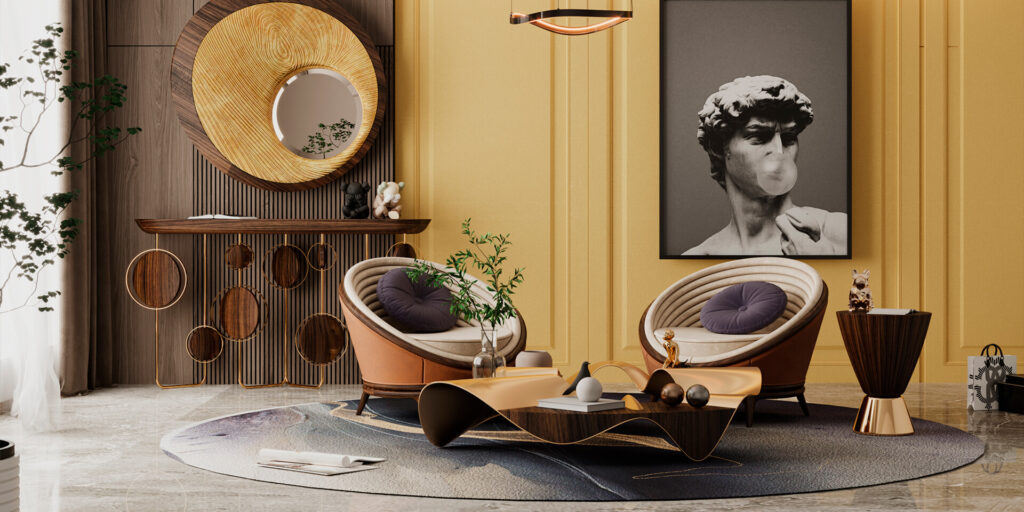
Contemporary luxury interior design continues to be shaped by art and culture,
one notable trend is the incorporation of contemporary art into interior spaces.
Luxury homes and hotels often display a rotating collection of artwork that reflects the latest artistic trends.
This not only adds aesthetic value, but also enhances the cultural richness of the space
, providing occupants with a dynamic and ever-changing visual experience.
Cultural motifs and themes are also prevalent in luxury interior design.
For example, Moroccan-inspired interiors feature intricate tile work, vibrant textiles and traditional furnishings,
creating a sense of exoticism and cultural immersion.
On the other hand, Scandinavian design emphasizes simplicity, functionality and the use of natural materials,
reflecting the cultural values of the Nordic countries.
Materials play an important role in integrating art and culture with luxury interior design,
traditional craftsmanship and artisanal techniques are often used to create custom pieces that pay tribute to cultural traditions.
For example, Italian marble and Venetian glass have been celebrated in luxury interiors for centuries,
reflecting Italy’s rich artistic heritage.
See More: Integration of art and technology in interior spaces